
How to Equalize Your Ears on Your First Dive
Simple tips to descend calmly and avoid ear pressure while scuba diving.
How to Equalize Your Ears on Your First Dive
Simple tips to descend calmly and avoid ear pressure while scuba diving.
Home » How to Equalize Your Ears When Scuba Diving | First Dive Tips
Why Do Your Ears Feel Pressure When Scuba Diving? 👂🌊
One of the most common concerns before a first scuba diving experience is ear pressure. Many beginners wonder if their ears will hurt underwater, or what happens if they cannot equalize during the descent.
The good news is that, in most cases, ear pressure can be managed easily when you learn how to equalize your ears while scuba diving correctly. The key is not to force it, not to wait until it hurts, and to descend slowly with your instructor or dive professional.
As you go down underwater, the pressure around you increases. Your middle ear needs to balance that pressure through the Eustachian tube, a small passage that connects the middle ear with the back of the throat. Equalizing helps air move into the middle ear so the pressure feels balanced again.
During a try dive, Discover Scuba Diving experience or beginner dive, this is explained before entering the water. You do not need previous experience, but you do need to listen carefully, communicate clearly and descend at a comfortable pace.
If you are still choosing where to do your first dive, you can explore our diving destinations and compare options before deciding where your first underwater experience could take place.
The golden rule: do not wait until it hurts
A common beginner mistake is waiting too long before equalizing. You should start equalizing early and often, from the beginning of the descent, even before you feel strong pressure.
If you wait until your ears hurt, equalizing may become harder. In that case, the safest thing to do is stop, signal your instructor, ascend slightly and try again gently.
At Family Elite Divers, we work as a booking platform connecting travellers with certified local partner dive centres. The actual activities are carried out by authorised local centres, where dive professionals guide you step by step before and during the experience.
How to Equalize Your Ears When Diving Step by Step ✅
Equalizing should feel gentle. You should never have to blow hard or force your ears. For beginners, the most important idea is simple: go slowly, equalize frequently and stop if you feel discomfort.
1. Descend slowly and communicate early
There is no rush during a first dive. If you feel pressure in your ears, let your instructor know using the hand signal explained during the briefing. In many cases, simply stopping the descent or going slightly shallower makes equalizing much easier.
2. Try the Valsalva technique gently
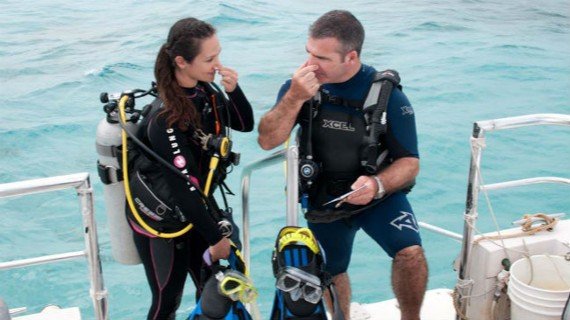
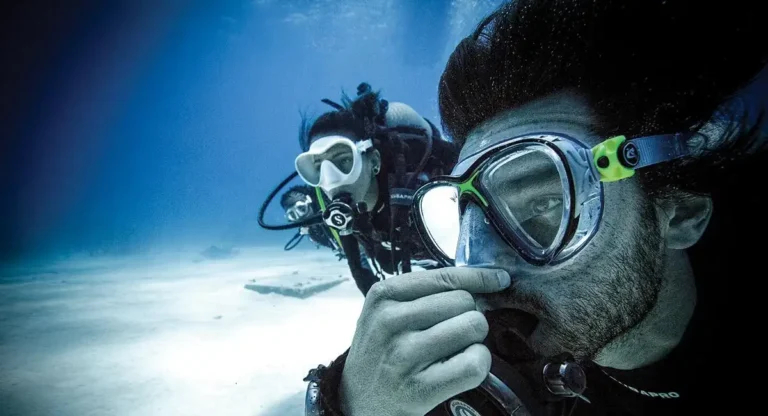
The most common method is to close your mouth, pinch your nose and blow very gently, as if you were trying to send a small amount of air towards your ears. The important word here is gently. If you need to blow hard, stop and ascend a little before trying again.
3. Swallow, yawn or move your jaw
Some divers equalize better by swallowing, making a soft yawning movement or moving the jaw from side to side. Everyone is different, so during a beginner dive the goal is to stay relaxed and find the technique that works best for you.
4. Do not dive with congestion or ear pain
If you have a cold, strong nasal congestion, sinus issues or ear pain, equalizing can become much more difficult. In that situation, it is usually better to postpone the dive or ask for medical advice instead of forcing the experience.
If your first dive is part of a trip to Spain, you can start with our scuba diving in Spain page, where we group the main Spanish destinations available through Family Elite Divers.
For travellers already planning the Canary Islands, our diving in Tenerife guide can help you understand the island, the type of conditions you may find and which areas are popular for beginner-friendly experiences.
What if you cannot equalize underwater?
If you cannot equalize, do not keep descending. Stop, signal your instructor, ascend slightly and try again slowly. If it still does not work, the dive can be adapted, paused or cancelled. In scuba diving, comfort and safety always come before reaching a certain depth.
You can also read how Family Elite Divers works if you want to understand the booking process, the deposit payment and how we help travellers connect with certified local partner centres.
Tips to Equalize Better on Your First Dive 🤿
Ear equalization becomes much easier when you are calm, understand what is happening and know that you can stop at any moment. For many beginners, the biggest challenge is not the technique itself, but tension, nerves or fear of doing something wrong.
Before your first dive, keep these simple ideas in mind:
- Equalize before it hurts, not once the pressure is already strong.
- Never blow hard; equalization should be gentle.
- Descend slowly and stay close to your instructor.
- Signal early if you feel pressure or discomfort.
- Avoid diving when congested or if you have ear pain.
Some destinations and dive sites are especially popular for beginners because of easier access, calmer conditions or shallow training areas. However, sea conditions can change from one day to another, so the final decision should always be made by the local partner centre carrying out the activity.
If you are comparing beginner options, you may also find it useful to read our guide to what to expect on your first scuba dive, especially if you want to understand the briefing, equipment, sensations and safety procedures before booking.
FAQ: Ear Equalization When Scuba Diving ❓
Is ear pressure normal when scuba diving?
Yes, feeling some pressure during descent is normal. The important thing is to equalize early, descend slowly and communicate if the pressure does not go away.
Should equalizing your ears hurt?
No. Equalizing should not hurt. If you feel pain, stop descending, go slightly shallower and try again gently.
What is the easiest equalization technique for beginners?
The most common technique is to pinch your nose and blow gently. Some people also equalize by swallowing, yawning softly or moving the jaw.
Can I do a try dive if I struggle to equalize?
It depends. If you simply need more time, the descent can often be slowed down. If you cannot equalize at all or feel pain, you should not continue descending.
Can I scuba dive with a cold?
It is not recommended to dive with strong congestion, a cold or ear pain, because it can make equalization difficult and increase the risk of discomfort or injury.
Book Your First Dive With More Confidence 🐠
Learning how to equalize your ears is a normal part of scuba diving. You do not need previous experience, but you should descend calmly, follow the instructions and never force your ears if you feel pressure.
Family Elite Divers helps travellers find and book scuba diving experiences with certified local partner dive centres, so you can choose an option that fits your level, destination and travel plans.

I’m Esteban, a diver and the person behind Family Elite Divers.
Tell me your skill level, your dates, and where you’d like to dive, and I’ll help you choose the experience that best suits you.
Do you have any questions before booking? Write to me, and I’ll give you personalized guidance.