What Is a Safety Stop in Diving? Why It Matters Before You Surface
A clear guide to safer ascents, beginner training and better dive habits
What Is a Safety Stop in Diving? Why It Matters Before You Surface
A clear guide to safer ascents, beginner training and better dive habits
Home » What Is a Safety Stop in Diving? Why It Matters Before You Surface
🤿 Safety stop in diving: quick answer
A safety stop in diving is a short pause made near the end of a scuba dive, usually during the final part of the ascent. In recreational diving, it is commonly done for around 3 minutes at about 5 metres, although the exact depth and time can depend on your computer, instructor, guide, dive profile and conditions. 🤿
A safety stop is not the same as a mandatory decompression stop. On most recreational no-decompression dives, the safety stop is a recommended safety practice rather than a required decompression obligation. It gives your body extra time to continue releasing absorbed nitrogen and helps keep the final ascent slower and more controlled. 🌊
Quick answer: a safety stop is a controlled pause, often around 3 minutes at 5 metres, before surfacing from a recreational dive. It helps support a slower ascent, better buoyancy control, extra off-gassing time and safer dive habits. If your instructor, guide or dive computer indicates a stop, respect it unless there is a real emergency. ✅
At Family Elite Divers, we help travellers find and book scuba experiences with selected local dive centers and authorised partner centers. For us, a centre that explains safety stops, ascent speed and surfacing procedures clearly during the briefing is showing good organisation. You can see our approach on How Family Elite Divers works. 🧭
A safety stop is a habit, not just a countdown
Many new divers think the safety stop is just “waiting before coming up”. In reality, it is a useful part of the dive where you practise neutral buoyancy, breathing control, group awareness, depth control, air checks and calm communication. 📋
If you are learning to dive or planning your next trip, start with our diving destinations and the wider guide to diving in the Canary Islands. Safety stops are part of the mindset that turns a dive into a controlled experience, not just an underwater tour. 🌍
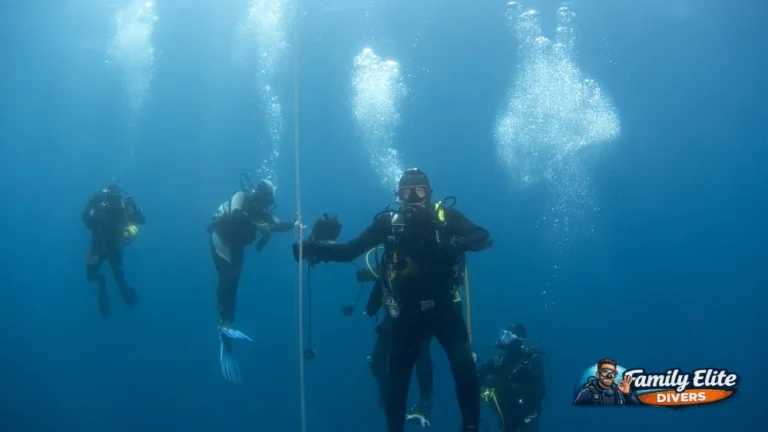
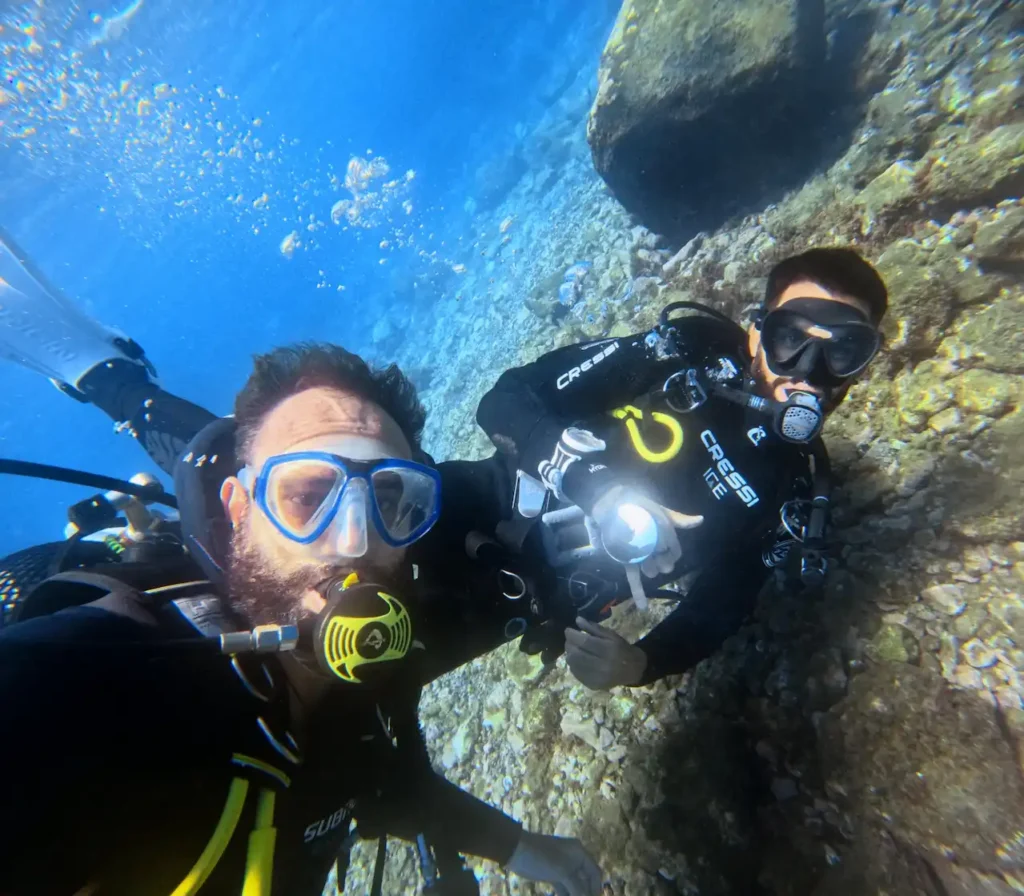
⏱️ What happens during a safety stop?
During a dive, your body absorbs more nitrogen while breathing compressed gas under pressure. During ascent, that nitrogen starts leaving your tissues. A safety stop adds a cautious pause before surfacing, giving the final part of the ascent more control. 🔎
Typical depth
Many divers stop around 5 metres, although 3–6 metres may be used depending on the computer, guide or conditions. 📍
Why it matters: this shallow zone is a practical place to control buoyancy before surfacing. ✅
Typical duration
A common reference is about 3 minutes, though some profiles, computers or guides may recommend longer. ⏱️
Why it matters: it prevents rushing the final ascent and reinforces calm dive behaviour. 🌊
Not always mandatory
On recreational no-stop dives, it is usually preventive, but it is still a very good habit. 📋
Why it matters: it should not be confused with a required decompression stop. ⚠️
Buoyancy practice
Holding position in shallow water requires fine control of breathing, BCD use and body position. 🤿
Why it matters: it is one of the best small tests of control for developing divers. ✅
Safety stop vs decompression stop
Safety stop
Purpose: add a safety margin on recreational no-decompression dives. ✅
Common reference: around 3 minutes near 5 metres. ⏱️
Status: strongly recommended unless there is an emergency or a specific instruction. 📋
Decompression stop
Purpose: complete a required stop generated by the dive profile. ⚠️
Duration: depends on computer, tables, depth, time and breathing gas. 🧭
Status: mandatory if your profile requires it; skipping it increases risk. 📋
Why those minutes matter
A safety stop does not turn poor dive planning into safe dive planning, but it does add a layer of prudence. It helps avoid fast final ascents, gives the group time to regroup, supports air checks, improves buoyancy control and makes surfacing more organised. In beginner training, it also builds habits that stay with you for future dives. 🎓
If you are learning to dive, this concept connects directly with ascent control, dive planning and using a dive computer. You can continue with Open Water Diver course in the Canary Islands or Open Water Diver course in Tenerife. 🤿
FED tip: before a guided dive, ask during the briefing where the safety stop will be done, how long it will last, what signal will be used, who controls the time and what to do in low visibility, current or low-air situations. A good guide should explain it before entering the water. ✅
🧭 When should you do a safety stop?
In recreational scuba diving, a safety stop is generally a good practice, especially after deeper dives, repetitive dives, training dives or guided dives where the group needs to ascend in an organised way. But real safety also requires judgement: you should not hold a stop if staying underwater creates a bigger immediate risk. 📋
When it is strongly recommended
A safety stop is especially useful after moderate or deeper recreational profiles, repetitive dives, multi-day dive trips, Open Water training, guided dives and any dive where the group should ascend slowly together. It also helps you finish the dive calmly instead of rushing to the surface. 🌊
When it may be skipped for safety
If there is a real emergency, very low gas, a serious diver problem, strong current, equipment issue, loss of control or another situation where staying underwater is riskier, the guide or instructor may prioritise a controlled ascent to the surface. The stop matters, but it should not override an immediate safety problem. ⚠️
Common mistakes during a safety stop
Common mistakes include floating up and down, staying too close to the surface, not checking the computer, losing the group, over-inflating or dumping too much air from the BCD, breathing rapidly from stress or thinking the stop replaces good planning. A safety stop works best together with slow ascent, good buoyancy and a clear briefing. 🤿
Quick summary
- What it is: a preventive pause during the ascent before surfacing. ⏱️
- Where it is done: commonly around 5 metres, depending on computer or guide. 📍
- How long it lasts: around 3 minutes is a common reference, but it can vary. 🧭
- Why it matters: it adds margin, calm and control to the final ascent. ✅
- Not the same as decompression: required decompression stops are not optional. ⚠️
- It does not replace planning: depth, time, gas and limits still matter. 📋
Safety stops and flying after diving
Doing a safety stop does not remove the need to respect sensible waiting times before flying. Even after a well-controlled dive, your body continues releasing gas after you leave the water. If you are diving during a holiday, read how long to wait before flying after diving. ✈️
❓ FAQs about safety stops in scuba diving
What is a safety stop in scuba diving?
It is a preventive pause during ascent, commonly around 5 metres, to add a safety margin before surfacing. 🤿
How long is a safety stop?
A common reference is about 3 minutes, although the exact duration may vary by computer, guide, profile and conditions. ⏱️
How deep is a safety stop?
Many safety stops are done around 5 metres, often within a practical shallow range of about 3 to 6 metres. 📍
Is a safety stop mandatory?
On recreational no-decompression dives it is usually recommended rather than mandatory. If your computer shows required decompression, that is different. ⚠️
What happens if you miss a safety stop?
It depends on the dive profile and situation. You should not skip it without reason, but in a real emergency surfacing safely may be the priority. ✅
Do you learn safety stops in Open Water?
Yes. Beginner courses teach controlled ascents, dive planning and the importance of safe surfacing habits. 🎓
If you are planning a guided dive or course and want to understand how ascents are managed, tell us your level, island, dates, recent experience and activity type. We can help you choose authorised partner centres with clear briefings and organised dive planning. 📩
I’m Esteban, a diver and the person behind Family Elite Divers.
Tell me your skill level, your dates, and where you’d like to dive, and I’ll help you choose the experience that best suits you.
Do you have any questions before booking? Write to me, and I’ll give you personalized guidance.
🔗 Related articles to dive more safely
If you are learning or improving your dive safety, these guides will help you understand planning, training and ascent control. 🤿
- Open Water Diver course in the Canary Islands — the foundation for ascents, safety and planning. 🎓
- Open Water Diver course in Tenerife — price, duration, requirements and booking tips. 🤿
- Discover Scuba Diving vs Open Water vs Advanced — compare beginner experiences and certification levels. 📋
- Scuba diving in Tenerife — areas, guided dives and practical planning advice. 🌊
- Flying after diving — another key safety decision during a scuba trip. ✈️