Can You Scuba Dive With Glasses or Contact Lenses?
Simple options to see clearly underwater on your first scuba diving experience.
Can You Scuba Dive With Glasses or Contact Lenses?
Simple options to see clearly underwater on your first scuba diving experience.
Home » Can You Scuba Dive With Glasses or Contact Lenses?
Can You Scuba Dive With Glasses or Contact Lenses? 🤿
If you wear glasses or contact lenses every day, it is completely normal to ask: can you scuba dive with glasses or contact lenses? 👓 The simple answer is that yes, many people scuba dive with vision correction, but you need to choose the right option before entering the water.
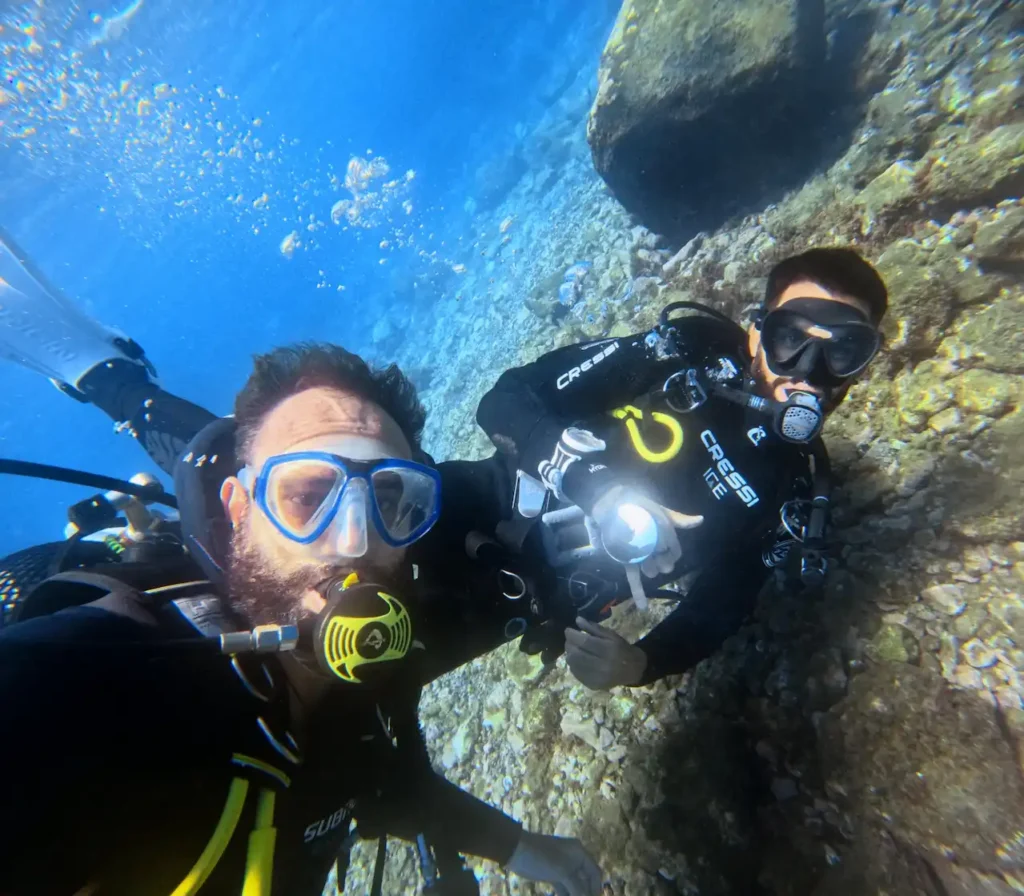
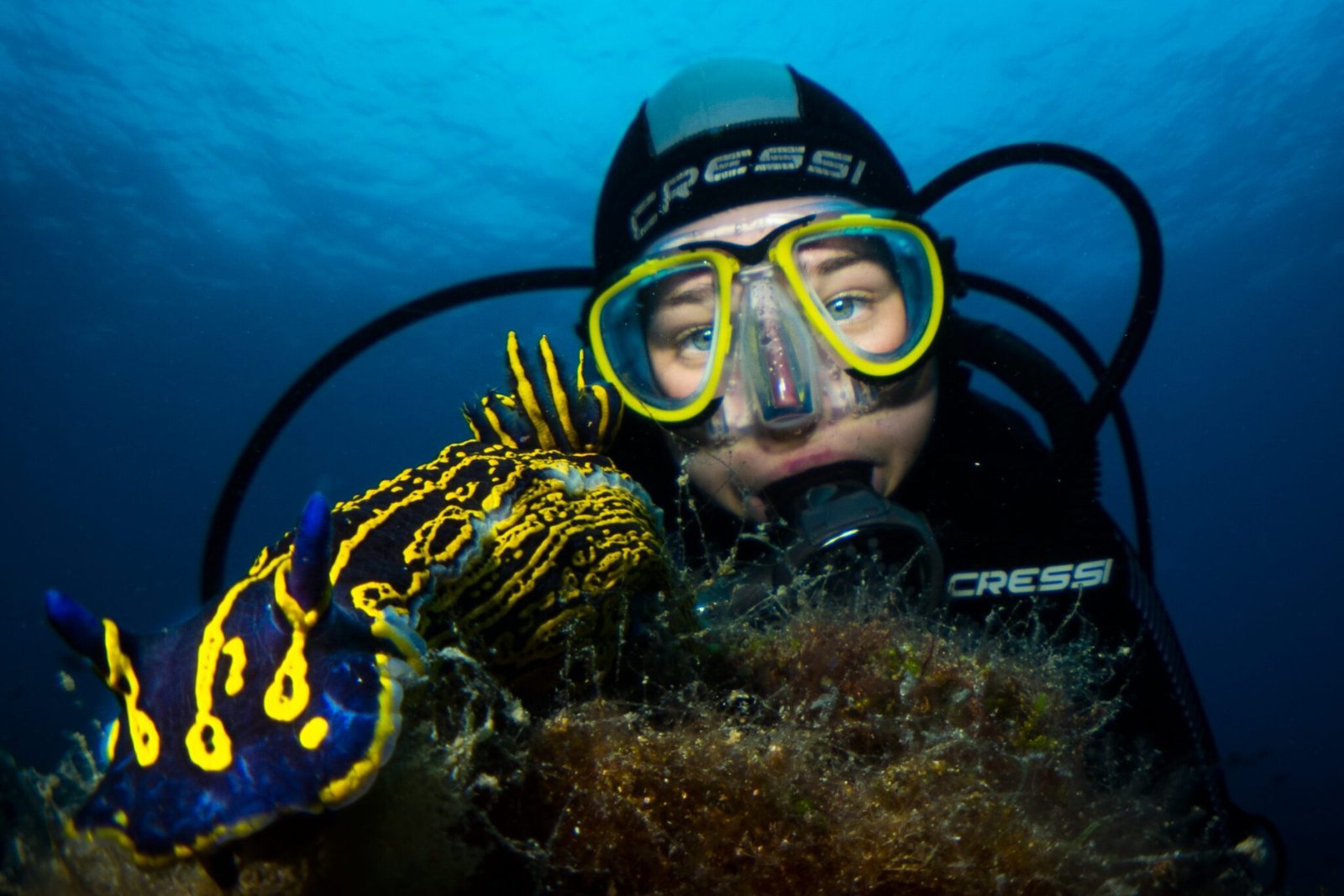
The most important thing to know is that regular glasses cannot usually be worn under a standard scuba mask ❌. The arms of the glasses break the seal of the mask, allowing water to leak in. For scuba diving, the mask needs to seal directly against your face so the experience feels comfortable and safe.
The good news is that there are several solutions: soft contact lenses, a prescription dive mask, or in some cases diving without correction if your prescription is mild. PADI explains that divers with impaired vision commonly use prescription scuba masks, soft disposable contact lenses or other vision-correcting mask options. :contentReference[oaicite:0]{index=0}
For a first scuba diving experience or Discover Scuba Diving activity, the goal is not necessarily to see exactly as you do on land. What matters is being able to recognize hand signals, see your instructor, feel oriented and enjoy the underwater world 🐠.
Underwater vision can also feel different because of refraction. PADI notes that objects may appear larger and closer underwater, which means some people with mild vision issues may feel more comfortable than expected. :contentReference[oaicite:1]{index=1}
At Family Elite Divers, we work as a booking and intermediary service, connecting travellers with certified local partner dive centres 🤝. If you wear glasses, contacts or have any concern about your vision, it is best to mention it before booking so the local partner centre can guide you based on the activity, location and available equipment.
If you are still preparing for your first underwater experience, you may also find our guide to what to expect on your first scuba dive useful, especially if you want to understand breathing, sensations, safety and how the activity usually works 🌊.
Can You Scuba Dive With Contact Lenses? ✅
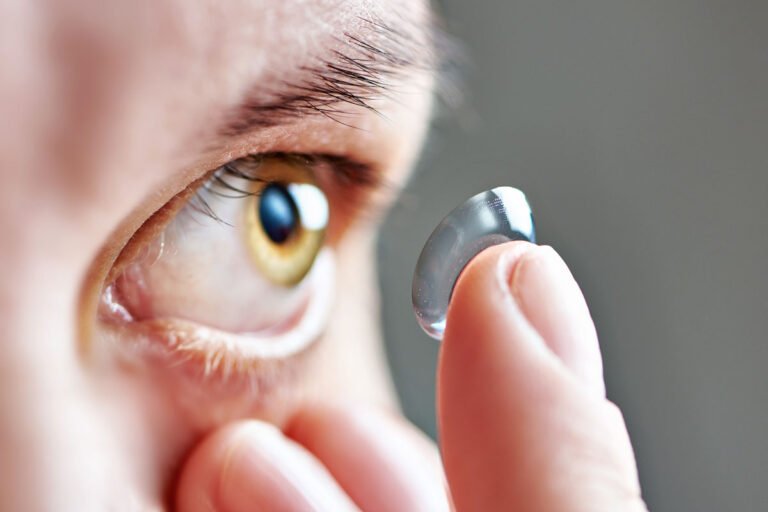
In many cases, scuba diving with soft contact lenses can be a practical option, especially if you already wear them comfortably in daily life 👁️. Contact lenses allow you to see clearly before, during and after the dive without depending on a specific prescription mask.
However, there are a few precautions to keep in mind. DAN explains that contact lenses can be useful for divers, but water can contain bacteria, so contact lens wearers should be careful if water enters the mask and should consult an eye care professional before diving with contacts. :contentReference[oaicite:2]{index=2}
For beginner scuba experiences, soft lenses are usually preferred over hard or gas-permeable lenses, because they tend to be more comfortable and more stable under a mask. PADI also advises that if your mask floods during a skill or while clearing water, it can help to keep your eyes closed to reduce the chance of losing a lens. :contentReference[oaicite:3]{index=3}
As a practical checklist, if you plan to dive with contact lenses:
- ✔ Use preferably soft, disposable contact lenses.
- ✔ Bring a spare pair in case you lose one.
- ✔ Avoid touching your eyes with wet or dirty hands.
- ✔ Tell the instructor that you wear contact lenses.
- ✔ If water enters the mask, stay calm and follow the instructions.
- ✔ If you have eye irritation, infection or discomfort, ask a healthcare professional before diving.
If your concern is not only vision but also water confidence, you can read our article on whether you need to know how to swim for Discover Scuba Diving 🌊.
Can You Scuba Dive With Prescription Glasses? 👓
With regular prescription glasses, the practical answer is usually no ❌. The issue is not the prescription itself, but the way glasses sit on your face. Their arms prevent the scuba mask from sealing properly, which can cause constant leaking and discomfort.
For people who rely on glasses every day, one of the best alternatives is a prescription dive mask. DAN explains that there are several options to improve underwater vision, including contact lenses, stock-lens masks and custom prescription dive masks. :contentReference[oaicite:4]{index=4}
The right option depends on your prescription, whether you have astigmatism, whether you need help reading instruments and whether you are planning a one-time beginner experience or regular diving. For a Discover Scuba Diving experience, many people choose contact lenses if they already use them. For someone planning to dive more often, a personal prescription dive mask can be a very comfortable long-term solution 🤿.
1. If your prescription is mild
If your prescription is low, you may be able to enjoy a first scuba diving experience without special correction, as long as you can see the instructor, recognize hand signals and feel comfortable underwater 🐠. Because objects appear larger and closer underwater, some people with mild nearsightedness feel less limited than expected.
2. If you wear glasses all day
If you depend on glasses for moving around, reading or recognizing faces, it is better not to improvise. In that case, ask in advance whether soft contact lenses or a prescription scuba mask would be the most practical option for your activity.
3. If you have astigmatism or a strong prescription
With more complex prescriptions, it is best to speak with an optician or eye care professional before buying equipment ⚠️. Not every mask works well with every type of prescription, and standard lenses may not correct complex vision needs in the same way as custom lenses.
4. If you only need glasses for reading
If you only need help seeing things up close, you may not need a fully prescription mask. Some divers use reading lenses or bifocal solutions for gauges and computers, but for a first experience the local dive professional will explain the essential signals and keep the activity simple.
If you are comparing beginner options in the Canary Islands, you can start with our Discover Scuba Diving in South Tenerife guide, especially if you want a calm introduction with a briefing, basic equipment explanation and professional supervision.
What Is the Best Option for a First Scuba Dive? 🌊
For a first scuba dive, the best option is usually the simplest one that gives you enough comfort and confidence. You do not necessarily need to buy expensive equipment just to try scuba diving once, but you should be able to see well enough to feel safe, oriented and relaxed.
As a general guide:
- ✔ Soft contact lenses: practical if you already wear them comfortably.
- ✔ Prescription dive mask: useful if you depend heavily on glasses or plan to dive more often.
- ✔ No correction: possible only if your prescription is mild and you feel comfortable.
- ✔ Regular glasses: not recommended under a standard mask because they break the seal.
If you also want to know how to choose a reliable operator, read our guide on how to choose a dive center in Tenerife, where we explain safety, group size, communication, equipment and trust signals ✅.
Tips Before Diving If You Wear Glasses or Contact Lenses 💡
Wearing glasses or contacts does not have to stop you from scuba diving 🤿. Many people complete their first dive, Discover Scuba Diving experience, courses and guided dives using contact lenses or prescription masks. The important thing is to prepare your vision option before entering the water.
- ✔ Tell the dive centre in advance that you wear glasses or contact lenses.
- ✔ Do not try to dive with regular glasses under a standard mask.
- ✔ If you use contacts, bring a spare pair.
- ✔ If your eyes are sensitive, ask your optician or eye doctor before diving.
- ✔ If you have a strong prescription, consider a prescription dive mask.
- ✔ If water enters the mask, do not rub your eyes underwater.
- ✔ Always follow the instructions of the instructor or guide from the local partner centre.
It is also useful to review other common beginner questions before booking, such as ear equalization, breathing underwater or swimming ability. You can start with our guide on how to equalize your ears when scuba diving, one of the most common concerns before a first descent 👂.
FAQ: Scuba Diving With Glasses or Contact Lenses ❓
Can I scuba dive with contact lenses?
Yes, many people dive with soft contact lenses 👁️. It is important to keep good hygiene, bring spares and tell your instructor before the dive.
Can I scuba dive with regular glasses?
Regular glasses are usually not practical under a scuba mask ❌. Their arms break the mask seal and may cause water to leak in constantly.
Which is better: contact lenses or a prescription dive mask?
It depends on your situation. For a one-time beginner experience, soft contact lenses may be more practical. For regular diving, a prescription dive mask may be more comfortable and stable.
Can I lose a contact lens underwater?
It can happen, especially if water enters the mask or you open your eyes widely while clearing it. That is why it is useful to bring spare contact lenses and follow the instructor’s guidance.
Do I need perfect vision for Discover Scuba Diving?
No, you do not need perfect vision, but you should be able to see hand signals, recognize your instructor and feel comfortable during the activity 🐠.
Book Your First Dive With More Confidence 🐠
Wearing glasses or contact lenses does not have to stop you from enjoying your first scuba diving experience. The key is to choose the right vision option, mention it before the activity and follow the guidance of the dive professional who accompanies you.
At Family Elite Divers, we help travellers find and book scuba diving experiences with certified local partner dive centres 🤝, so you can choose an option that fits your level, destination and expectations.
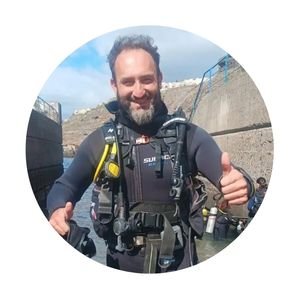
I’m Esteban, a diver and the person behind Family Elite Divers.
Tell me your skill level, your dates, and where you’d like to dive, and I’ll help you choose the experience that best suits you.
Do you have any questions before booking? Write to me, and I’ll give you personalized guidance.