What to See While Diving in Lanzarote: Marine Life, Fish and Volcanic Landscapes
Fish schools, occasional turtles, rocky life and volcanic scenery to help you choose the right dive
What to See While Diving in Lanzarote: Marine Life, Fish and Volcanic Landscapes
Fish schools, occasional turtles, rocky life and volcanic scenery to help you choose the right dive
Home » What to See While Diving in Lanzarote: Marine Life, Fish and Volcanic Landscapes
🐢 What can you see while diving in Lanzarote?
If you are wondering what to see while diving in Lanzarote, the answer is a mix of two things: Atlantic marine life and volcanic underwater scenery. Lanzarote is not only about one famous species or one specific dive site; its appeal comes from the combination of fish, lava rock, light, relief and life around the seabed. 🐠
During a scuba dive in Lanzarote, you may encounter fish schools, rocky-area species, moray eels, rays, small or larger groups of fish depending on the site, invertebrates, occasional turtles and lava formations with holes, cracks and walls. The key is to book with realistic expectations: the ocean does not guarantee specific wildlife encounters. 🌊
Quick answer: while diving in Lanzarote, you may see Atlantic marine life, fish schools, rocky reef species, occasional turtles, rays, moray eels and volcanic landscapes with lava, cracks, caves and underwater relief. The best area depends on your level, recent experience, sea conditions and the type of dive you want. ✅
At Family Elite Divers, we help travellers compare and book scuba experiences through selected local partner dive centres. We do not recommend a dive only because of a turtle photo or a fish-school image; we consider level, area, conditions, safety, guide support and realistic expectations. You can see how it works here: How Family Elite Divers works. 🧭
Wildlife is possible, not guaranteed
A turtle, a ray or a dense school of fish can make a dive unforgettable, but no serious provider should promise a specific wild animal. A responsible approach is to talk about possibilities, local areas, conditions, seasons and respectful behaviour underwater. 🐢
This article focuses on marine life and underwater scenery in Lanzarote. If you want to go deeper into lava, caves and volcanic rock formations, read our guide to volcanic diving in Lanzarote. 🌋
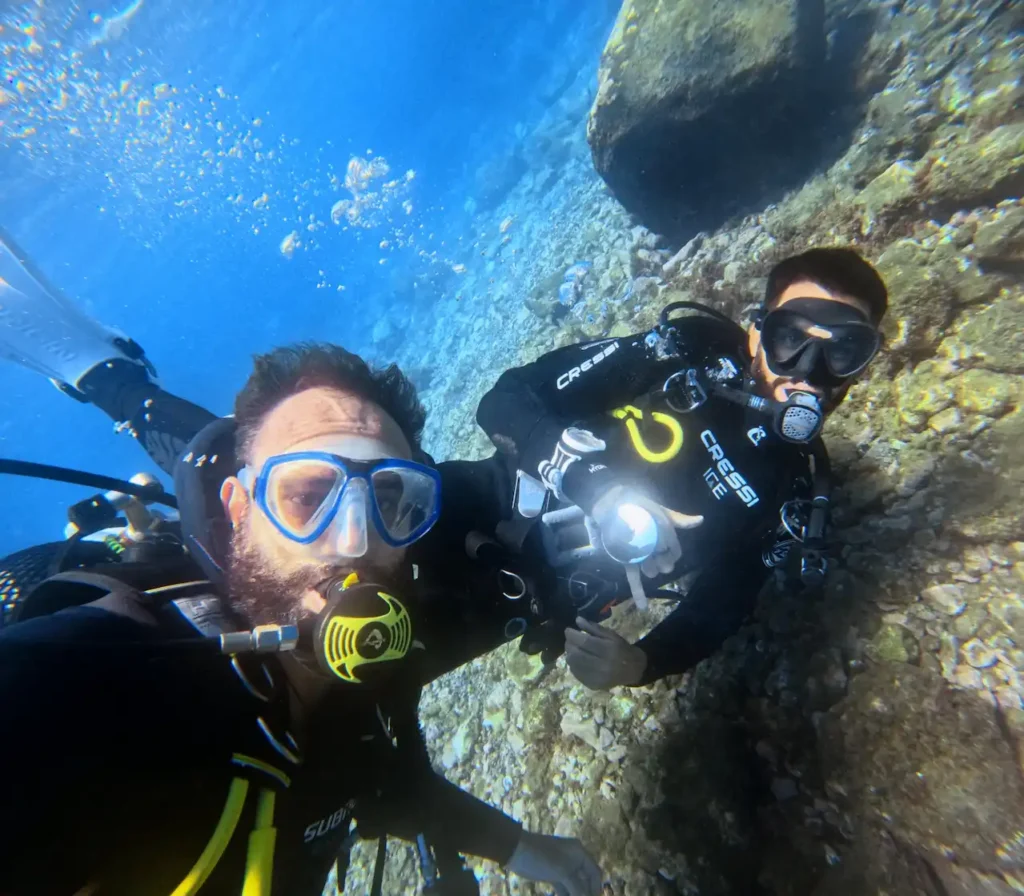
🐠 Marine life you may encounter in Lanzarote
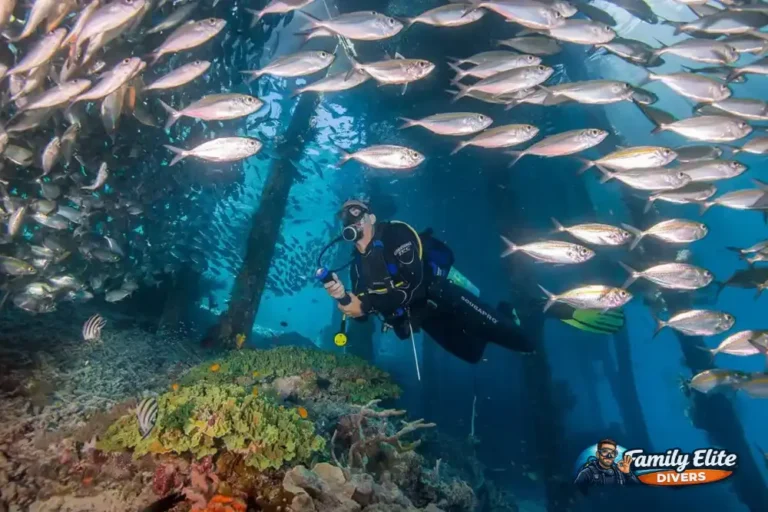
Marine life in Lanzarote is strongly connected to the island’s rocky and volcanic seabeds. Many animals use holes, cracks, walls and shaded areas for shelter, while fish schools may move across open areas or along rocky edges. 🔎
Fish schools
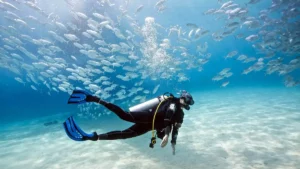
For many divers, fish schools are among the most visual encounters. Being surrounded by movement can make even a simple dive feel impressive. 🐟
Occasional turtles
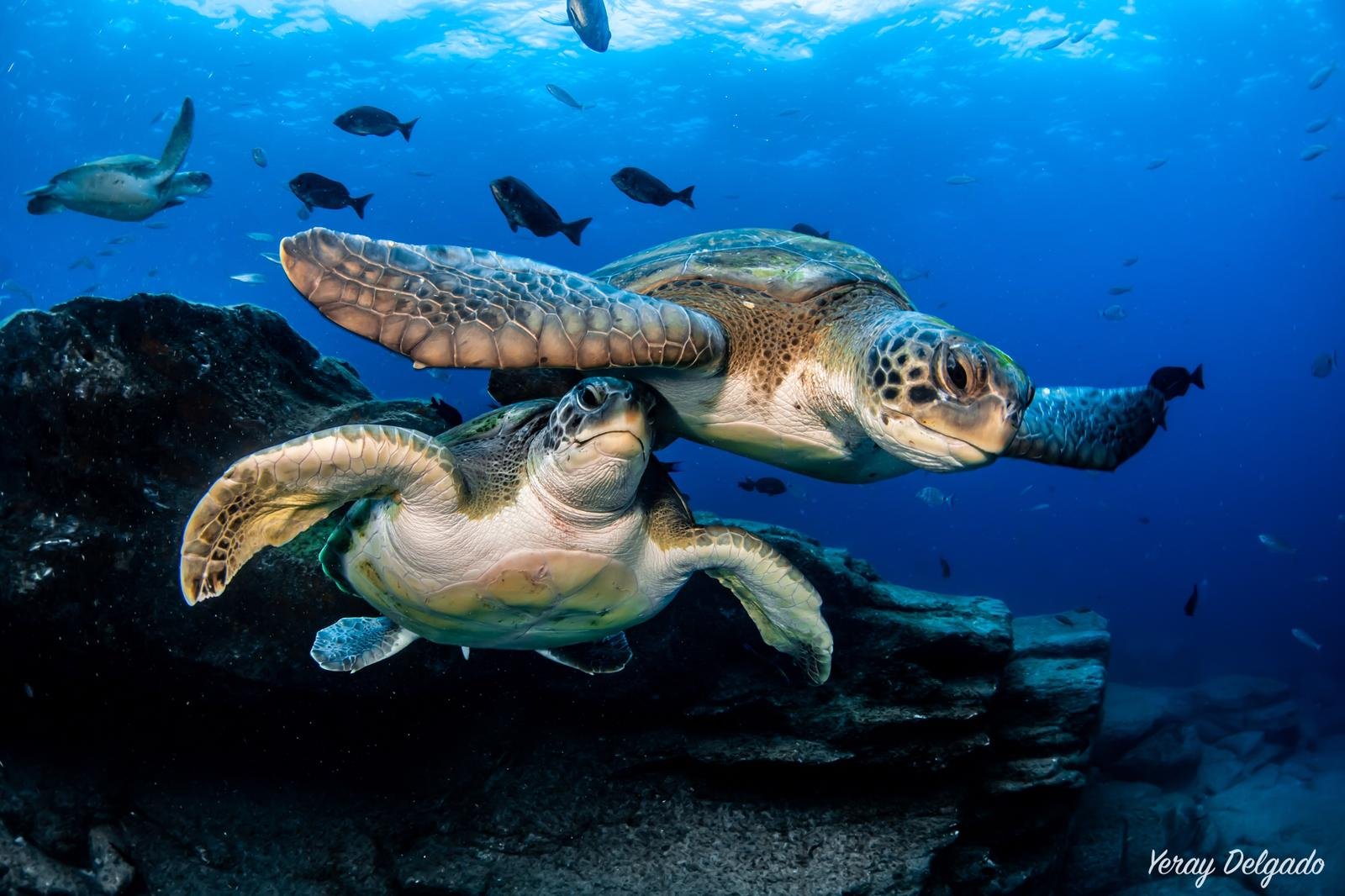
Turtles may appear on some dives, but they should never be treated as guaranteed. If you see one, observe calmly without touching, chasing or blocking its path. 🐢
Rays and sandy-bottom species
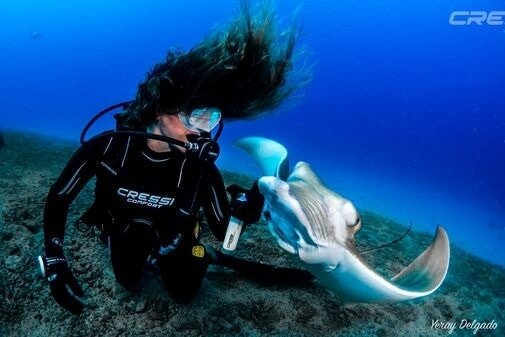
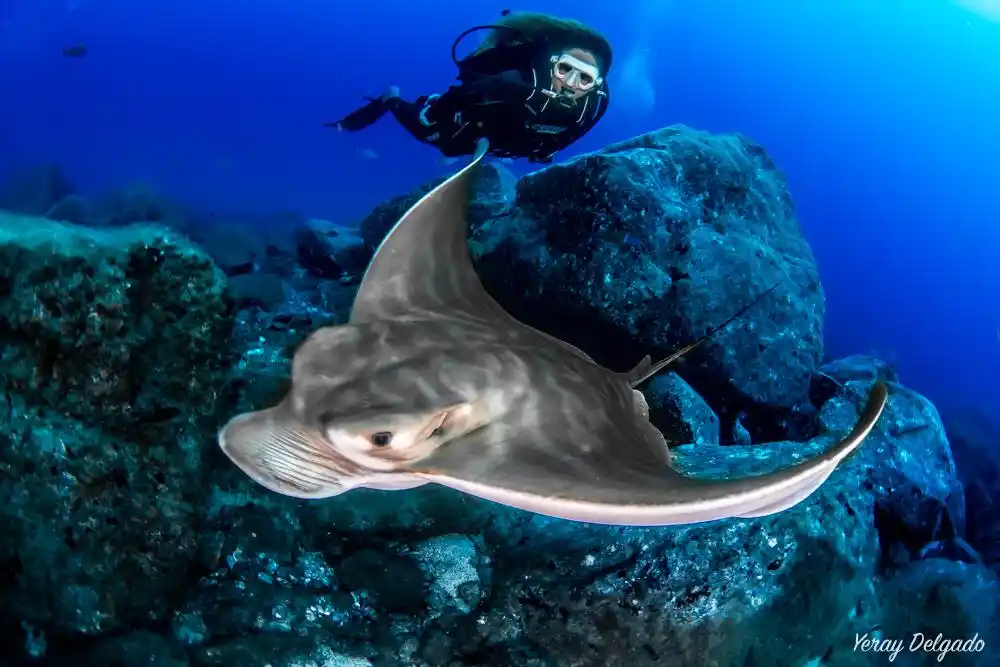
Some mixed or sandy areas may hold rays or other bottom-associated species. Keep distance and never disturb animals resting on the seabed. 🌊
Moray eels and rocky life
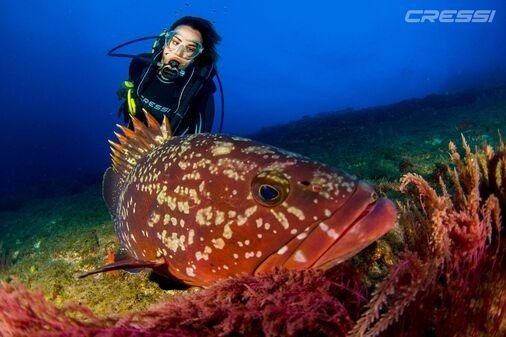
Lava cracks and holes are ideal shelters for rocky-area species. Look carefully, but never place your hands inside holes or disturb animals. 🪨
Invertebrates and small details
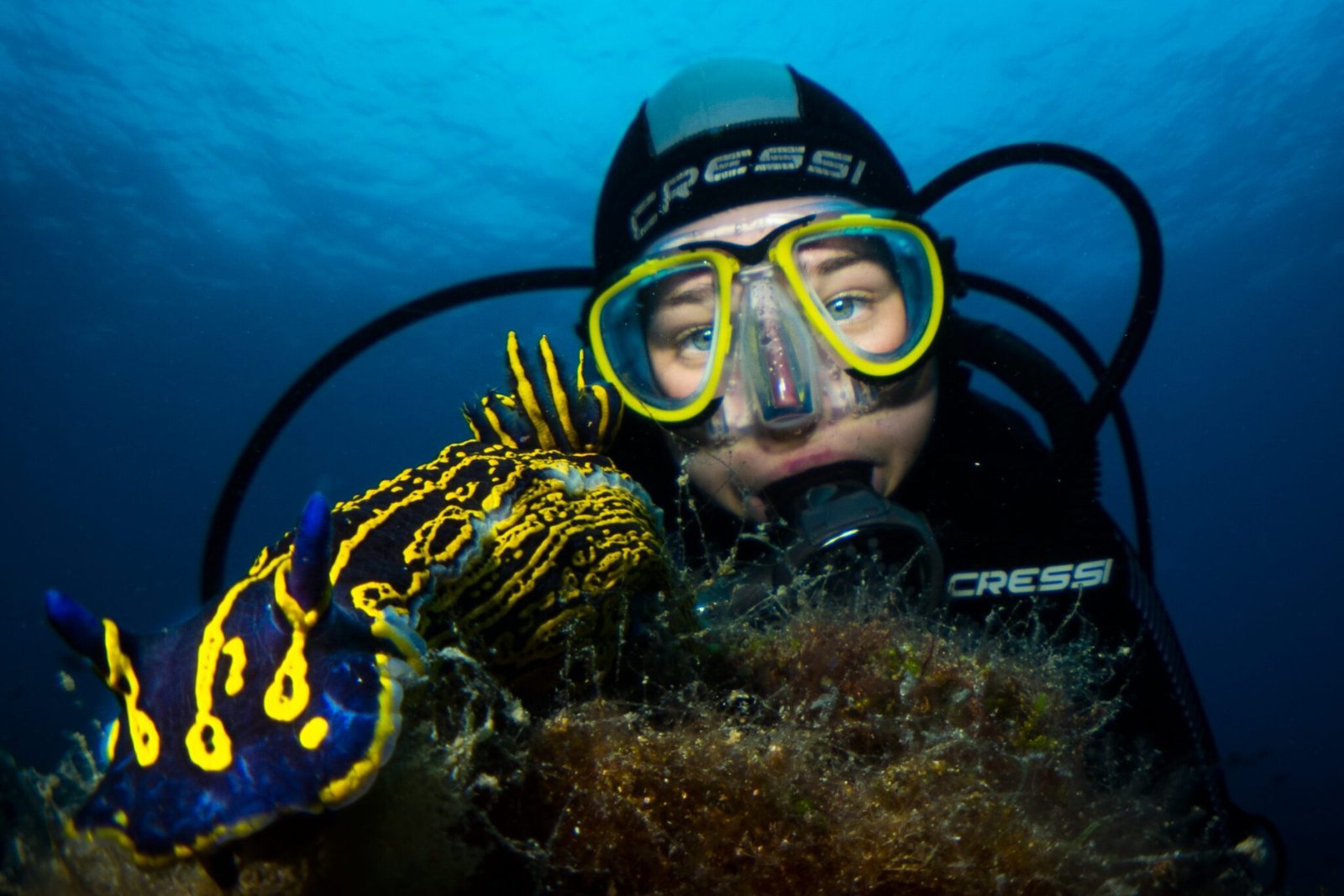
Not everything worth seeing is large. Slow diving helps you notice textures, small animals, colours and movement over volcanic rock. 🔍
Volcanic scenery
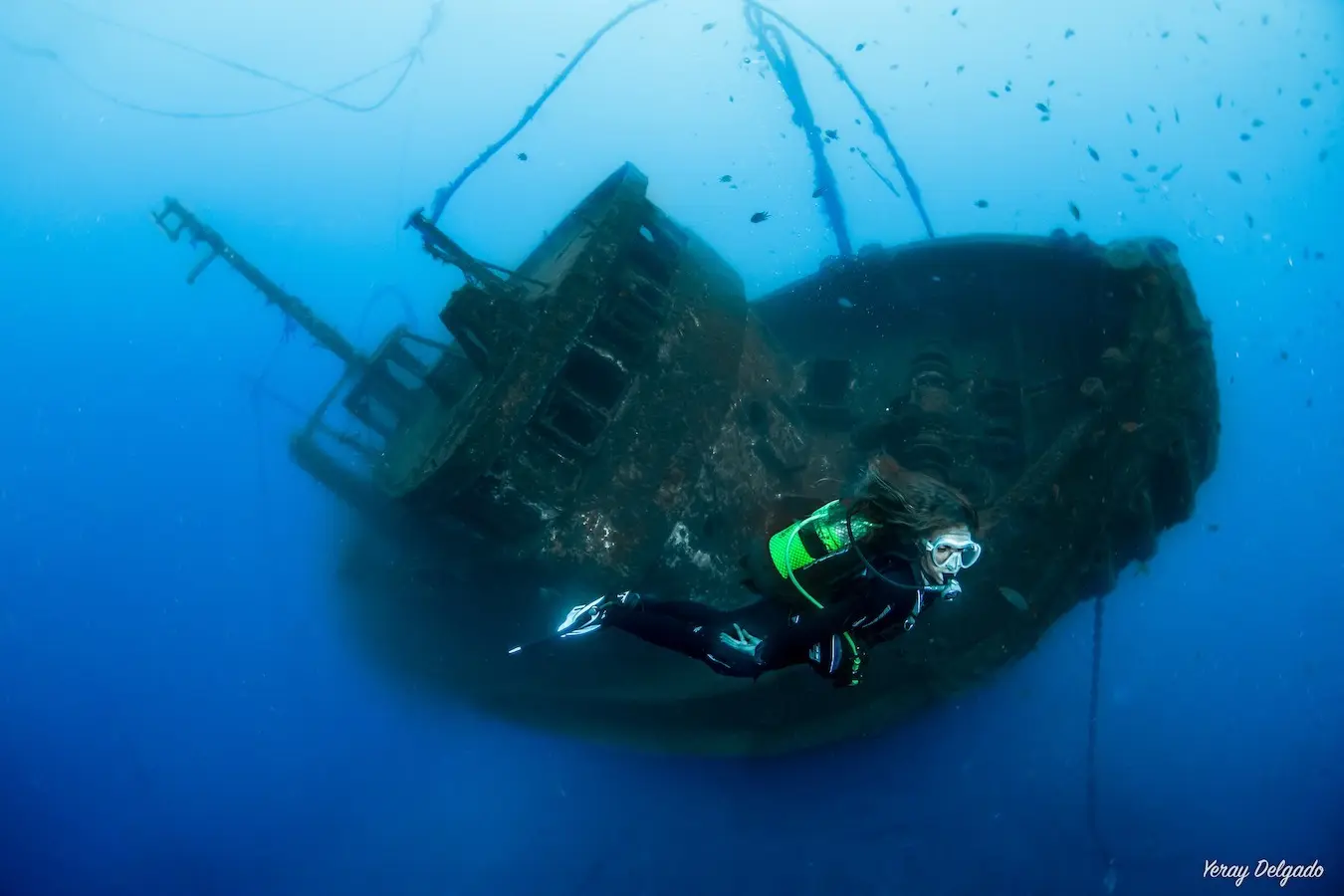
Lava is part of what you see while diving in Lanzarote: holes, arches, cracks, walls and dark surfaces shape many dive sites. 🌋
Areas where marine life and scenery combine
If you want variety underwater, compare areas such as Puerto del Carmen, Playa Blanca or Costa Teguise. Each area may suit a different accommodation base, level and dive goal. 📍
For an island-wide starting point, begin with diving in Lanzarote. If you are still choosing between areas, read Playa Blanca or Puerto del Carmen for diving. 🧭
FED tip: if marine life is your priority, do not book only because of one photo. Ask about area, seabed type, depth, season, conditions, ratio, required experience and responsible behaviour around animals. ✅
🧭 How to choose a dive for marine life and volcanic scenery
To choose well, decide first what matters most to you: fish, volcanic scenery, occasional turtles, calm seabeds, photography or a more varied dive profile. Not every area or site offers the same type of experience. 📋
If you want fish schools
Ask for areas where fish movement is commonly seen and where the dive profile allows you to observe without rushing. Good buoyancy helps a lot because smooth movement and a calm finning style usually disturb marine life less. 🐟
If you hope to see turtles
Keep expectations realistic. You can mention that seeing a turtle would be special, but the booking should not depend only on that. The priority is a suitable and respectful dive, without chasing animals or getting too close. 🐢
If volcanic scenery is your priority
Look for sites with lava, rocks, cracks or underwater relief. To understand this side of the island better, read what makes volcanic diving in Lanzarote unique. 🌋
Quick recap before choosing
- Lanzarote combines marine life and volcanic scenery: fish, rocky species, rays, occasional turtles and lava seabeds. 🐠
- Turtles cannot be guaranteed: if they appear, observe with distance and respect. 🐢
- Fish schools can make even a simple dive feel very visual. 🐟
- Volcanic seabeds add holes, cracks, walls and strong light contrast. 🌋
- For beginners, briefing, instructor attention and ratio matter more than a specific animal. ✅
- To compare other islands, browse all scuba diving destinations. 🧭
❓ Frequently asked questions about marine life and diving in Lanzarote
What marine life can you see while diving in Lanzarote?
You may see fish schools, rocky-area species, moray eels, rays, invertebrates and occasional turtles, together with volcanic underwater landscapes. 🐠
Can you see turtles while diving in Lanzarote?
It can happen, but it should not be guaranteed. If a turtle appears, observe calmly and avoid chasing or touching it. 🐢
Where can you see more marine life in Lanzarote?
It depends on the area, site and conditions. Puerto del Carmen, Playa Blanca and Costa Teguise can offer different experiences depending on your level. 📍
Is Lanzarote better for wildlife or volcanic landscapes?
Its appeal is the combination: Atlantic marine life over volcanic seabeds, with lava, cracks, holes and rocky areas. 🌋
Is Lanzarote good for underwater photography?
Yes, because of the contrast between volcanic rock, fish schools and light, but divers should keep good buoyancy and avoid touching the seabed. 📸
Where can I book a dive to see marine life in Lanzarote?
You can start with our diving in Lanzarote page and share your level, dates and preferences. 🧭
If you want to dive in Lanzarote with marine life and volcanic scenery in mind, send us your certification, number of dives, last dive date, accommodation area and what you would most like to see. We can help compare realistic options before booking. 📩
I’m Esteban, a diver and the person behind Family Elite Divers.
Tell me your skill level, your dates, and where you’d like to dive, and I’ll help you choose the experience that best suits you.
Do you have any questions before booking? Write to me, and I’ll give you personalized guidance.
🔗 Related articles about marine life and diving in Lanzarote
If you want to understand what you may see underwater, these guides can help you choose the right area and dive style. 🐠
- Volcanic Diving in Lanzarote — go deeper into lava, caves, cracks and underwater relief. 🌋
- Best dives in Puerto del Carmen — dive-site types and varied profiles for certified divers. 🤿
- Best dives in Playa Blanca — if you are interested in visual experiences and the southern area. 🗿
- Best dives in Costa Teguise — if you are staying in the east and want a practical dive plan. 📍
- How to choose a diving center in Lanzarote — safety and trust criteria before booking. ✅