Marine Life in La Palma: what you can see while diving
Moray eels, rays, volcanic reef fish and occasional special encounters around La Palma.
Marine Life in La Palma: what you can see while diving
Moray eels, rays, volcanic reef fish and occasional special encounters around La Palma.
Home » Marine Life in La Palma: what you can see while diving
🐠 Why La Palma marine life is so interesting
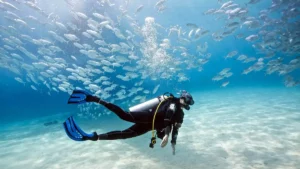
La Palma marine life is strongly shaped by the island’s volcanic origin, rocky seabeds, sandy patches, walls and coastal areas where depth can change quickly 🌊. This creates shelters for resident species and also open-water areas where occasional larger animals may pass through.
Quick Answer: While diving in La Palma, you may see moray eels, rays, stingrays, parrotfish, salemas, trumpetfish, groupers, octopus, schools of fish and, occasionally, larger species such as turtles or sharks. Sightings depend on the dive site, season, depth and sea conditions.
Quick Summary
- Common species: moray eels, parrotfish, salemas, trumpetfish, octopus and rays.
- Typical seabeds: volcanic rock, sandy areas, cracks, small caves and walls.
- Interesting areas: Puerto Naos, Santa Cruz de La Palma, Los Cancajos and Malpique.
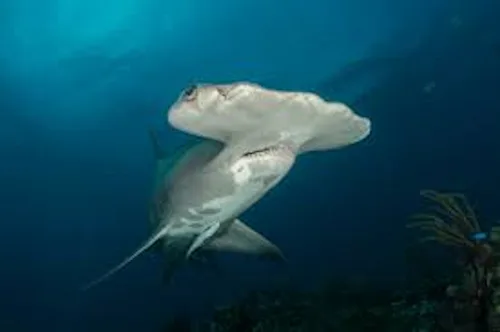
- Special sightings: hammerhead sharks, turtles or larger pelagic species may appear, but are never guaranteed.
- Best approach: observe calmly, do not touch wildlife and always follow the local guide’s instructions.
If you are still comparing areas around the island, you can read our guide to scuba diving in La Palma 🤿. And if you want to understand how we help travelers book with selected local partner centers, see how Family Elite Divers works.
🦈 Species you may encounter while diving in La Palma
La Palma’s underwater life is not about one single flagship species 😊. The real attraction is the variety: from small reef fish and rocky-bottom species to rays, moray eels and occasional open-water encounters.
Moray Eels
Where to look: cracks, rocks and volcanic areas
Tip: observe calmly and never put your hands into holes.
Where to look: cracks, rocks and volcanic areas
Tip: observe calmly and never put your hands into holes.
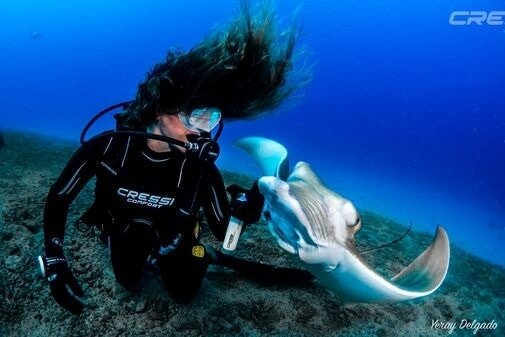
Rays and Stingrays
Where to look: sandy patches and mixed seabeds
Tip: keep distance and avoid disturbing sediment.
Where to look: sandy patches and mixed seabeds
Tip: keep distance and avoid disturbing sediment.
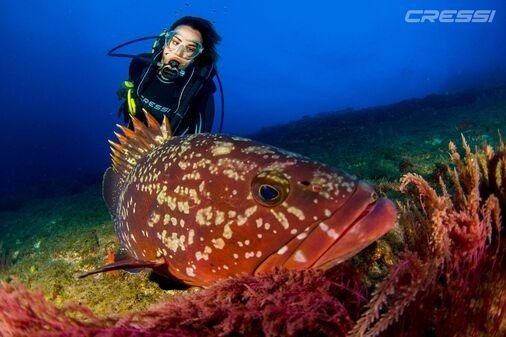
Coastal Fish
Common species: parrotfish, salemas, trumpetfish, groupers and damselfish
Tip: move slowly to improve observation.
Common species: parrotfish, salemas, trumpetfish, groupers and damselfish
Tip: move slowly to improve observation.
Octopus and Invertebrates
Where to look: rocky shelters, holes and protected areas
Tip: do not touch or force animals out of hiding places.
Where to look: rocky shelters, holes and protected areas
Tip: do not touch or force animals out of hiding places.
Sharks and Pelagic Species
Sighting: possible, but occasional
Tip: do not plan a dive expecting to see them for sure.
Sighting: possible, but occasional
Tip: do not plan a dive expecting to see them for sure.
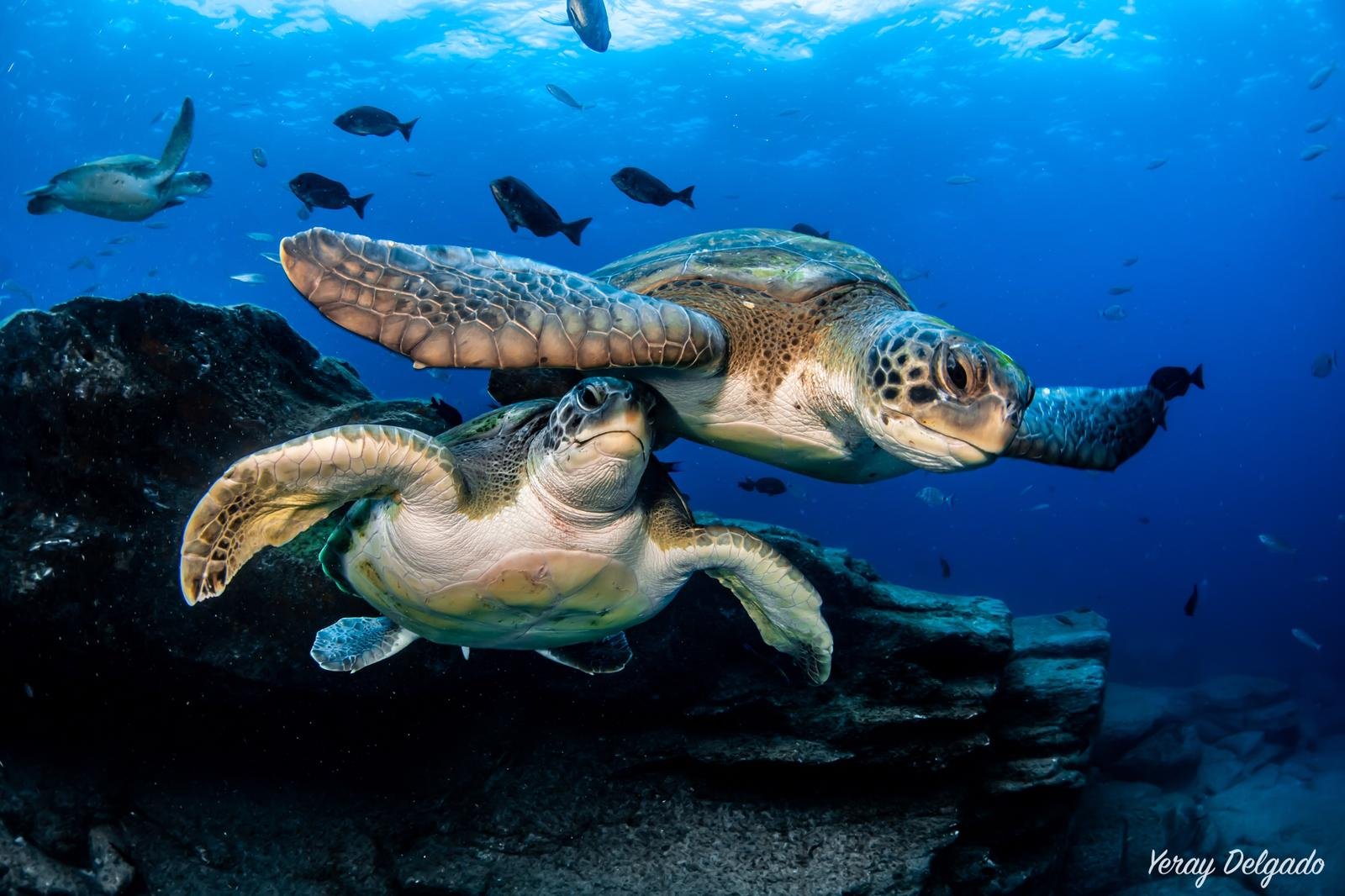
Turtles
Sighting: occasional and never guaranteed
Tip: keep distance and let them move naturally.
Sighting: occasional and never guaranteed
Tip: keep distance and let them move naturally.
In areas such as Puerto Naos, underwater encounters can be very special, but it is important not to promise specific wildlife 🐢. For broader regional context, you can also read our guide to marine life in the Canary Islands.
FED Tip: to enjoy wildlife more, avoid chasing animals or getting too close. The best encounters often happen when divers keep good buoyancy, calm breathing and respectful distance.
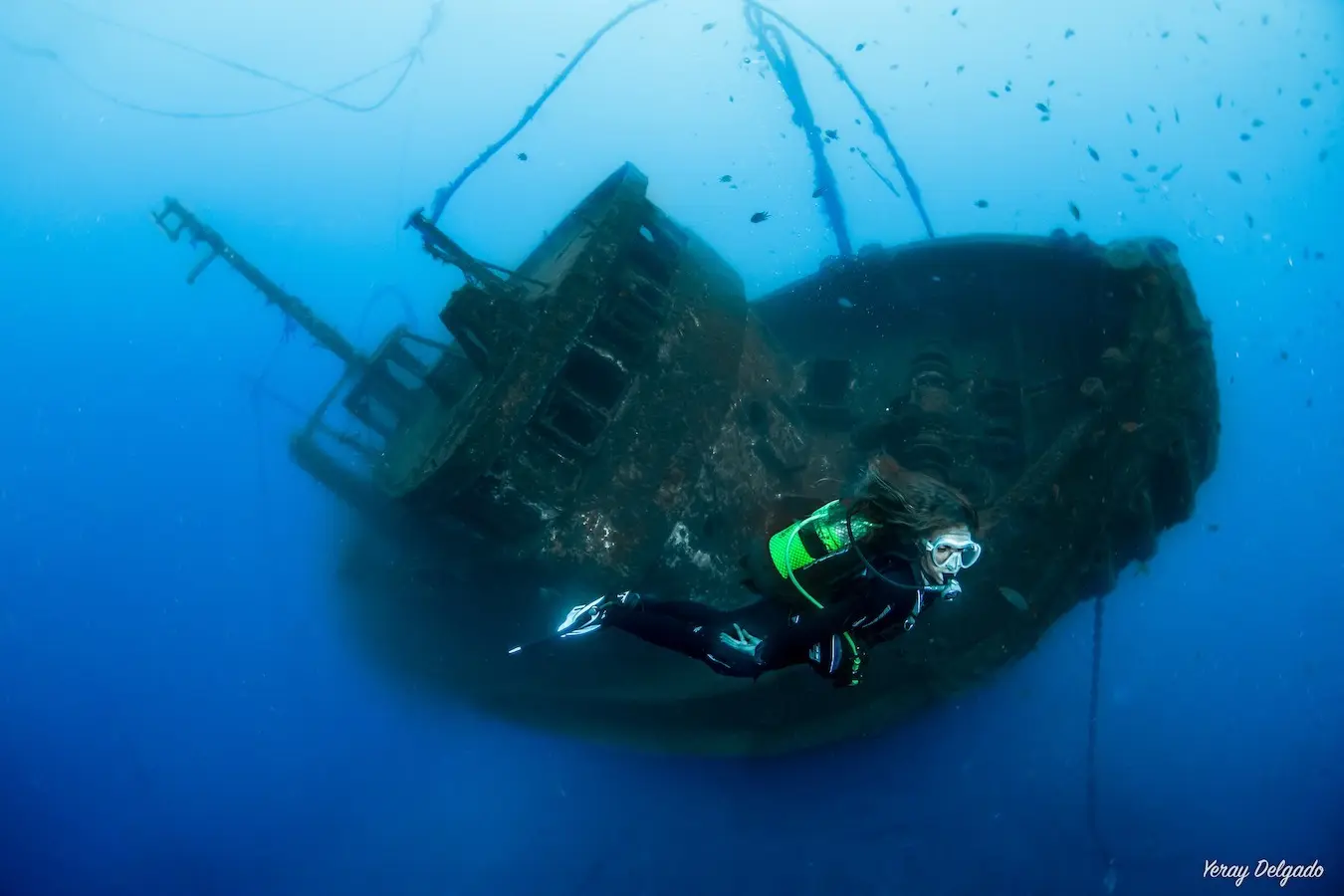
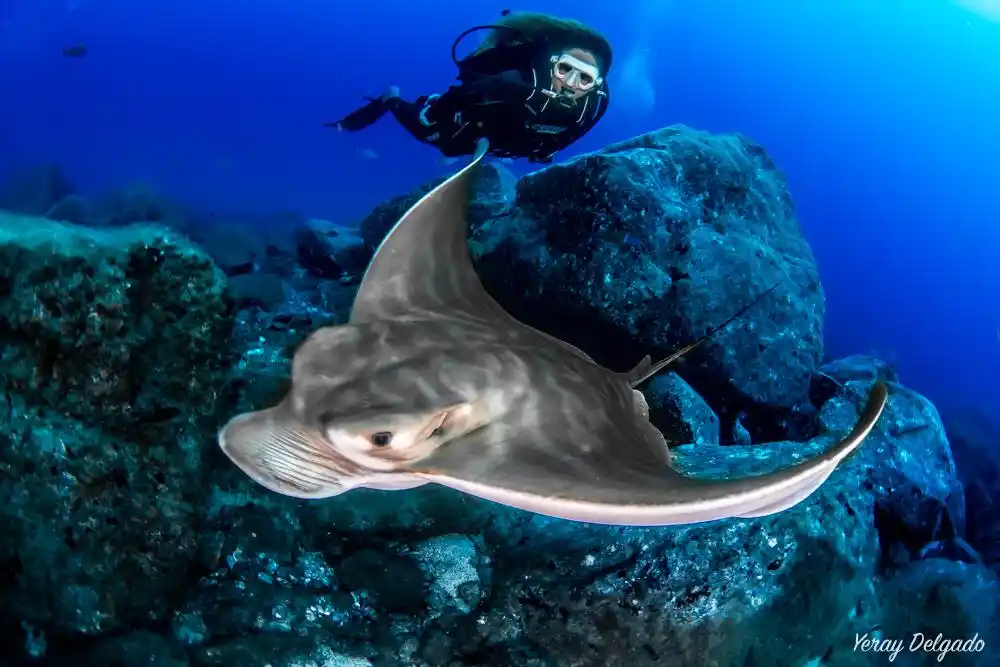
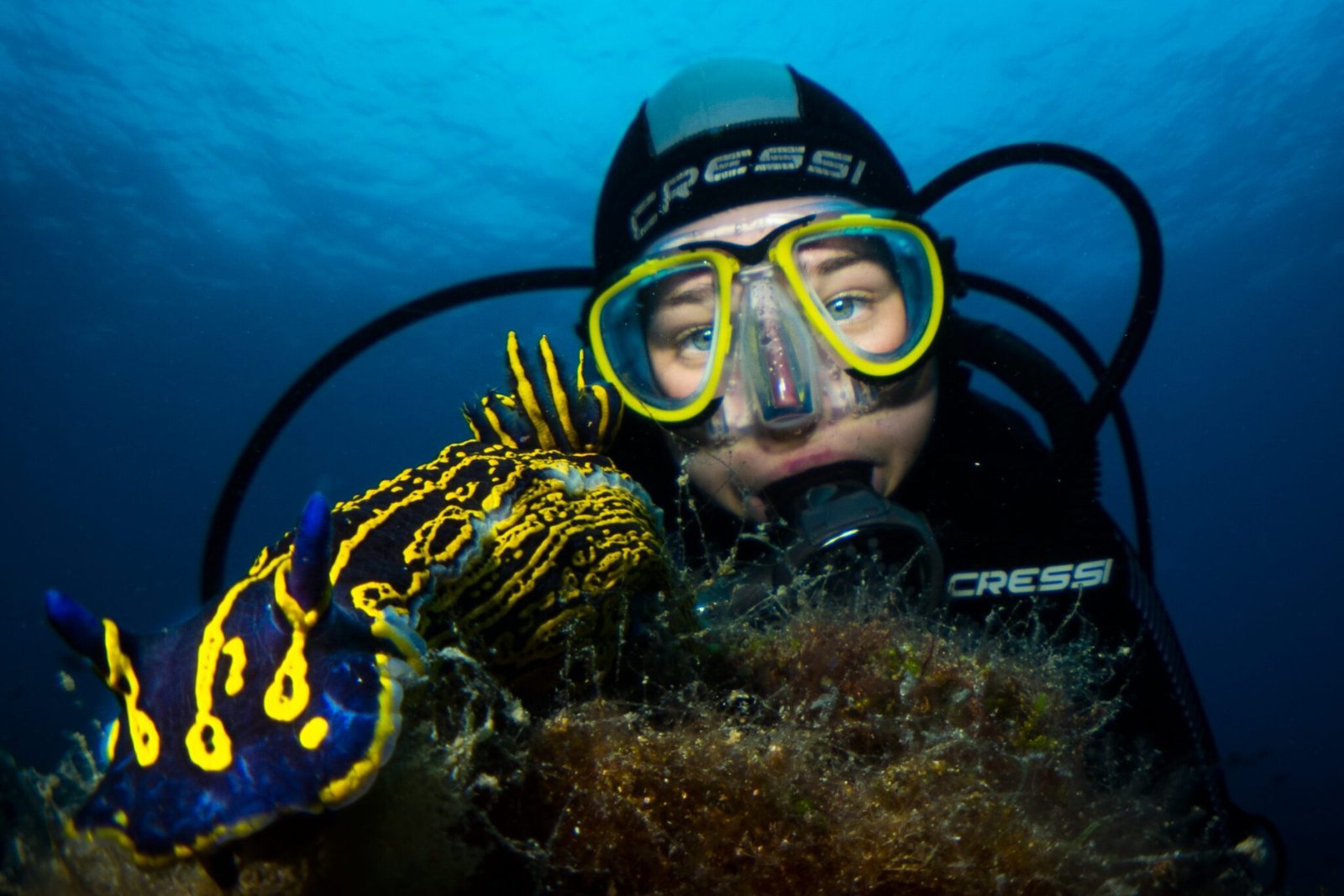
🌋 Where to see marine life in La Palma
The species you may see depend on the seabed, depth and coast orientation 🌍. That is why different La Palma dive areas can offer different underwater experiences.
Interesting areas for marine life
- Puerto Naos: volcanic seabeds, sandy patches and the possibility of special encounters on the west coast.
- Santa Cruz de La Palma and Los Cancajos: rocky seabeds, moray eels, coastal fish and varied routes.
- Malpique: known for its underwater scenery, crosses and volcanic atmosphere.
- Sandy areas: often interesting for rays, stingrays and bottom-dwelling species.
- Walls and volcanic rock: good shelters for moray eels, octopus and fish living around cracks.
If you are especially interested in sharks, remember that sightings are uncommon and depend on many factors 🦈. You can learn more in our guide to sharks in the Canary Islands, always understanding that encounters cannot be guaranteed on a recreational dive.
❓ Frequently Asked Questions
What marine life can you see in La Palma?
You may see moray eels, rays, parrotfish, salemas, trumpetfish, octopus, groupers, schools of fish and occasional larger species.
Can you see hammerhead sharks in La Palma?
Hammerhead sightings may occur in Canary Island waters, but they are occasional and cannot be guaranteed on a dive.
Where is the best place to see rays in La Palma?
Sandy areas and mixed seabeds can be more interesting, although sightings depend on the day and conditions.
Does marine life change depending on the dive area?
Yes. Volcanic rock, sandy bottoms, walls and depth all influence which species may appear.
Is it safe to dive near moray eels?
Yes, as long as you keep distance, do not touch them and never put your hands into cracks or holes.
To choose the area that best fits your level, you can explore our diving destinations and compare options in La Palma before booking 🏝️.
I’m Esteban, a diver and the person behind Family Elite Divers.
Tell me your skill level, your dates, and where you’d like to dive, and I’ll help you choose the experience that best suits you.
Do you have any questions before booking? Write to me, and I’ll give you personalized guidance.