Marine Life in the Canary Islands 🇮🇨
Discover turtles, rays, angel sharks, octopus and marine life while diving in the Canary Islands.
Marine Life in the Canary Islands 🇮🇨
Discover turtles, rays, angel sharks, octopus and marine life while diving in the Canary Islands.
Home » Marine Life in the Canary Islands: What You Can See While Diving
🌊 Marine Life in the Canary Islands: What Can You See Underwater?
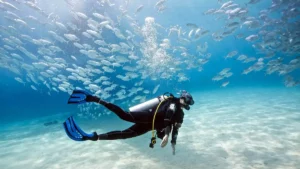
The marine life in the Canary Islands is one of the main reasons why so many divers choose this Atlantic archipelago. Warm enough to dive most of the year, volcanic underwater landscapes and a mix of Atlantic species create very varied diving experiences from island to island 🐠
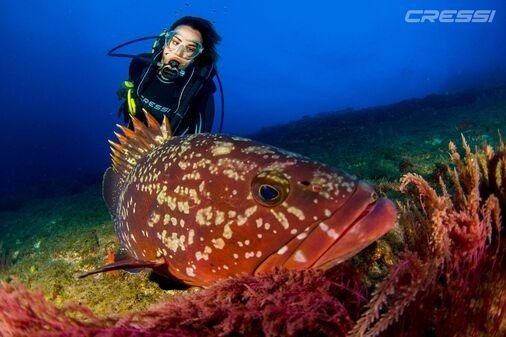
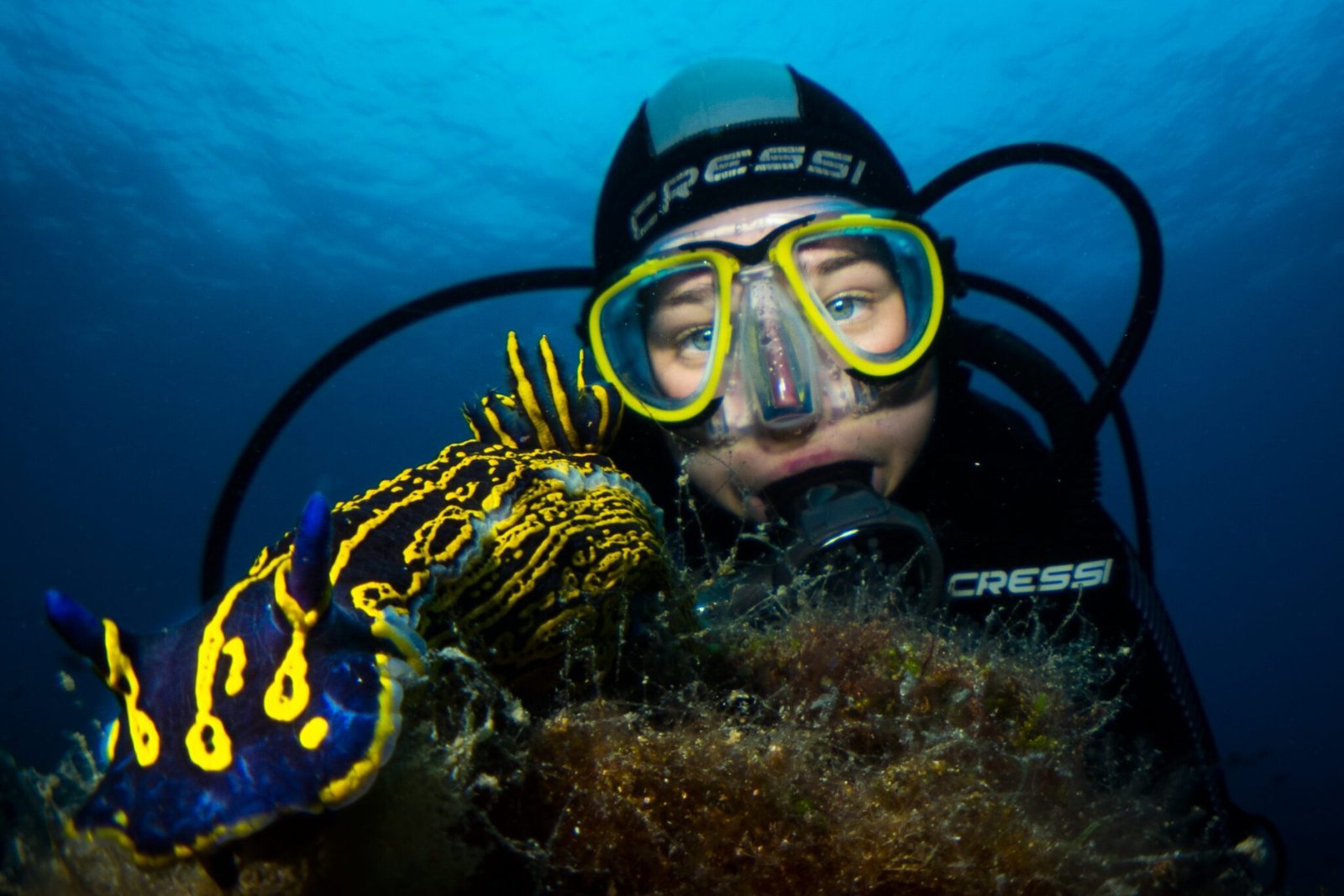
While diving in the Canary Islands, you may encounter sea turtles, rays, angel sharks, octopus, moray eels, trumpetfish, barracudas, groupers and large schools of fish. Some species are common in shallow areas, while others are more likely to appear in specific seasons, deeper sites or quieter dive zones.
For beginners, this means even a simple dive can feel exciting. For certified divers, the islands offer volcanic reefs, rocky formations, sandy bottoms and marine reserves where wildlife can be more abundant and diverse.
If you are still comparing islands, our Canary Islands diving guide can help you understand how destinations like Tenerife, El Hierro, La Palma and Gran Canaria differ from each other.
📌 Quick Summary: Marine Life in the Canary Islands
- ✔ High marine biodiversity throughout most of the year
- ✔ Common species include turtles, rays, octopus, moray eels and reef fish
- ✔ Angel sharks are one of the most iconic species in the Canary Islands
- ✔ Suitable for both beginner divers and certified divers
- ✔ Best areas depend on your level, island, season and sea conditions
🐢 Why Are the Canary Islands Good for Marine Life?
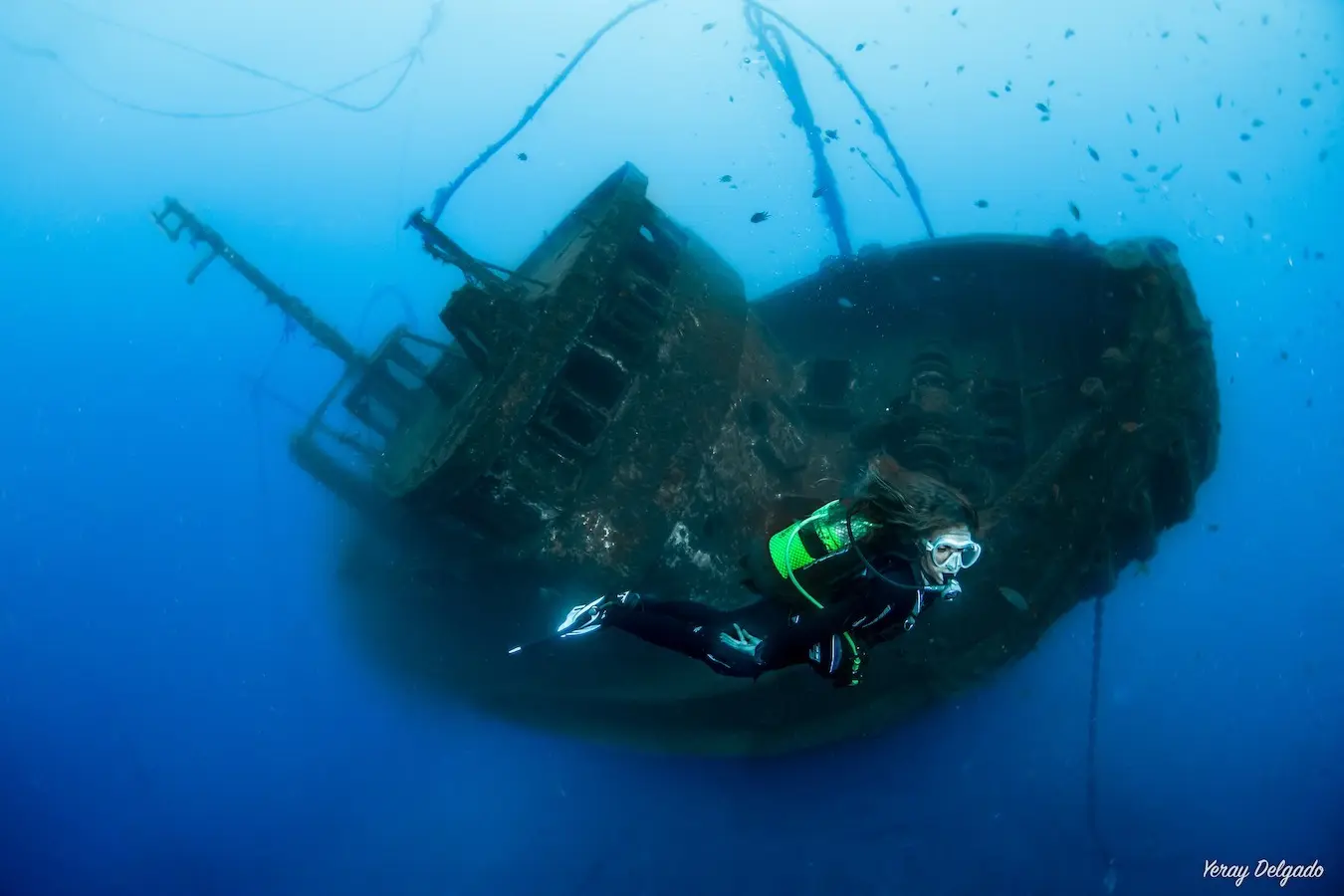
The Canary Islands are volcanic islands surrounded by the Atlantic Ocean. This creates a wide range of underwater habitats, including rocky reefs, lava formations, caves, arches, sandy bottoms and drop-offs.
This variety of habitats attracts many different species. Some animals prefer rocky shelters, others rest on sandy areas, and many fish gather around volcanic structures where there is food and protection.
Another advantage is that diving is possible during most of the year. Visibility is often good, and water temperatures are generally comfortable compared with many other European destinations. This makes the islands ideal for marine life encounters, underwater photography and beginner-friendly dives 🌞
If you are especially interested in turtles, you can read our specific guide about diving with turtles in Tenerife.
🐠 Main Marine Species You Can See While Diving
The exact species you see will depend on the island, season, dive site and sea conditions. However, some animals are especially associated with diving in the Canary Islands and can appear in many different types of dives.
🐢 Sea Turtles
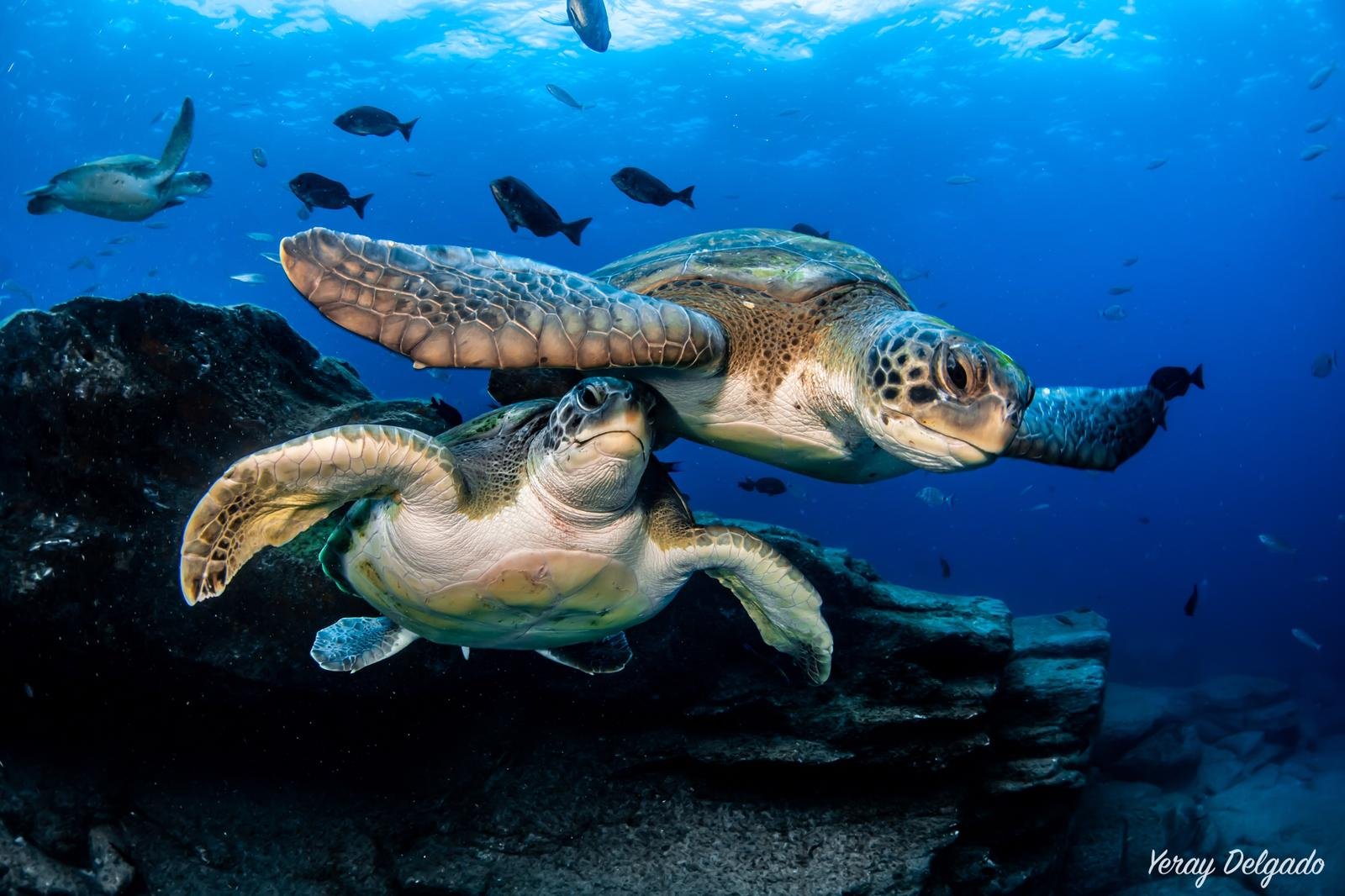
Sea turtles are one of the most memorable encounters for many divers. They can sometimes be seen swimming calmly, resting near the seabed or moving slowly through areas with reef life.
Turtle sightings are never guaranteed, but certain areas in Tenerife are especially popular among divers hoping to see them. For more detail, check our guide to where to see turtles while diving in Tenerife.
🦈 Angel Sharks and Rays
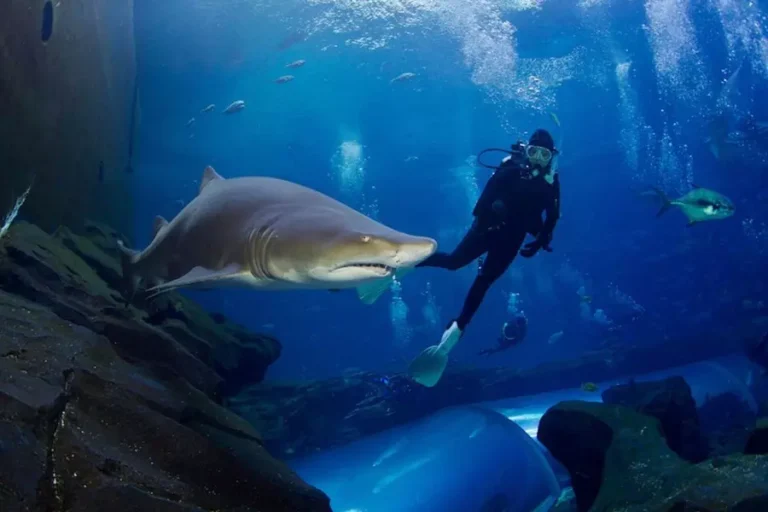
Angel sharks are one of the most iconic species in the Canary Islands. They are usually found resting on sandy bottoms and are more commonly associated with specific seasons and conditions.
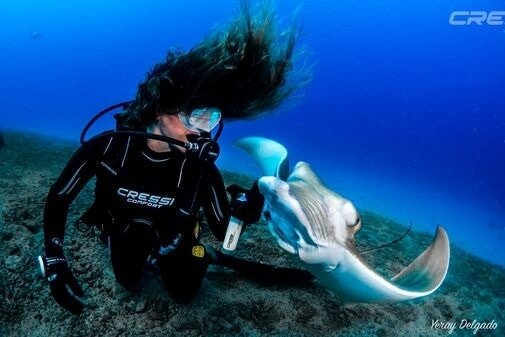
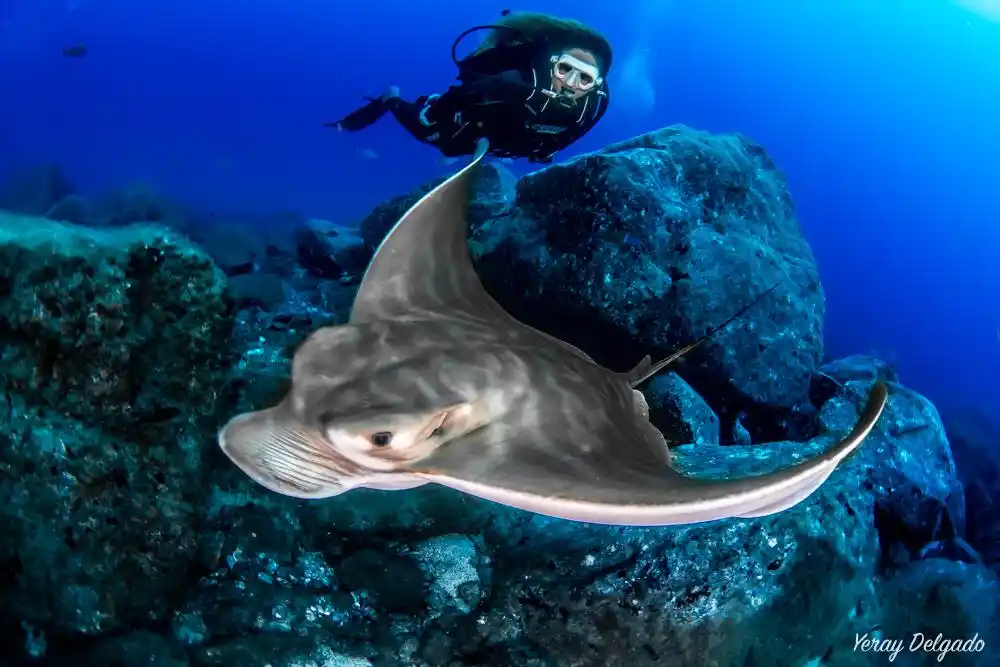
Rays and stingrays can also appear in sandy areas or mixed bottoms. These encounters are often calm and beautiful when divers keep a respectful distance and avoid disturbing the animals.
If you want to learn more about shark species in the archipelago, read our guide to sharks in the Canary Islands.
🐙 Octopus and Cuttlefish
Octopus are among the most fascinating animals to see underwater. They often hide inside volcanic rocks, change colour quickly and move with surprising intelligence.
Cuttlefish can also be seen in some areas, especially when conditions are calm. For many divers, watching these animals change colour, texture and position is one of the most interesting parts of the dive ✨
🐟 Moray Eels, Trumpetfish and Reef Fish
Moray eels are often found inside rocky crevices, while trumpetfish can be seen moving slowly and vertically near reef structures. Around them, divers may also find parrotfish, wrasse, damselfish, bream, groupers and schools of smaller fish.
These species are especially interesting for beginner divers because many can be seen at relatively shallow depths, without needing advanced certification or deep dives.
🐬 Dolphins and Pelagic Species
Dolphins are not a typical underwater sighting during every dive, but they can sometimes be spotted from boats or at the surface. In more open-water areas, divers may also occasionally see larger pelagic species, depending on location, season and luck.
For wild, less crowded diving and strong marine life potential, many divers also consider diving in El Hierro one of the most special experiences in the Canary Islands.
🏝️ Best Places to See Marine Life in the Canary Islands
Marine life changes from island to island. Some places are better for beginner-friendly encounters, while others are more suitable for certified divers looking for wilder, more natural dive sites.
🌊 Tenerife
Tenerife is one of the most versatile islands for marine life dives. It offers many different dive areas, good logistics and options for both beginners and certified divers.
In Tenerife, you can find reef fish, turtles, rays, octopus and volcanic underwater scenery depending on the dive site. Start with our full guide to scuba diving in Tenerife if you want to compare areas.
Some areas, such as Radazul, Los Cristianos, Las Galletas or Garachico, can offer very different experiences depending on the conditions. The right choice depends on your level, comfort underwater and the type of marine life you hope to see.
🌋 El Hierro
El Hierro is often considered one of the wildest diving destinations in the Canary Islands. It is known for La Restinga, volcanic formations, marine reserves and a quieter atmosphere than more touristy islands.
This island is especially attractive for divers looking for larger schools of fish, volcanic landscapes and a more natural diving environment. You can compare it in more detail in our guide to diving in El Hierro.
🌴 La Palma
La Palma offers volcanic underwater scenery and a more relaxed diving atmosphere. It can be very interesting for divers who want black volcanic bottoms, lava formations and quieter dive sites.
Marine life can include reef fish, octopus, rays and other Atlantic species depending on the area. For a full overview, read our guide to scuba diving in La Palma.
📊 Marine Life by Diver Level
| Diver level | Common marine life | Typical dive type |
|---|---|---|
| Beginner | Reef fish, octopus, turtles, small rays | Shallow dives or discover scuba experiences |
| Intermediate | Rays, moray eels, schools of fish, volcanic reef life | Guided dives with certified divers |
| Advanced | Angel sharks, pelagic species, deeper reef life | Deeper dives, walls or more exposed sites |
📅 Best Time to See Marine Life
One of the biggest advantages of the Canary Islands is that you can dive during most of the year. However, some species and conditions are more likely in certain seasons.
Summer and early autumn often bring warmer water, calmer conditions and excellent visibility. Winter can be interesting for divers looking for species such as angel sharks, although conditions may vary more depending on the island and dive site.
For a seasonal overview, you can also read our guide to the best time to dive in Tenerife.
🎒 Tips for Responsible Marine Life Encounters
Seeing marine life underwater is exciting, but it must be done responsibly. The best encounters happen when divers stay calm, move slowly and respect the natural behaviour of the animals 🧠
- ✔ Keep a respectful distance from all marine animals
- ✔ Never touch, chase or feed wildlife
- ✔ Avoid touching the seabed, especially around fragile areas
- ✔ Control your buoyancy before approaching marine life
- ✔ Follow your instructor or guide at all times
- ✔ Take photos carefully, without disturbing animals
If you are new to diving, it is better to start with a controlled experience such as a Discover Scuba Diving experience or continue training with an Open Water Diver course.
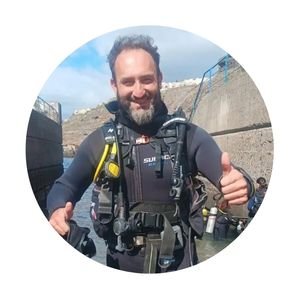
I’m Esteban, a diver and the person behind Family Elite Divers.
Tell me your skill level, your dates, and where you’d like to dive, and I’ll help you choose the experience that best suits you.
Do you have any questions before booking? Write to me, and I’ll give you personalized guidance.
🔗 Related Articles
If you want to explore more about diving, wildlife and underwater experiences in the Canary Islands, these guides can help you plan your next dive: