What to Do If You Feel Scared or Panic Underwater
Simple tips to dive with more calm, confidence and professional support.
What to Do If You Feel Scared or Panic Underwater
Simple tips to dive with more calm, confidence and professional support.
Home » What to Do If You Feel Scared or Panic Underwater
Is It Normal to Feel Scared Before Your First Scuba Dive? 🤿
Yes, it is completely normal to feel scared before scuba diving for the first time 🌊. Many beginners have questions before entering the water: “What if I feel overwhelmed?”, “What if I cannot breathe properly?”, “What if I panic underwater?” or “What if I want to stop?”.
The good news is that feeling nervous does not automatically mean you cannot dive ✅. In many cases, what you need is not extreme bravery, but the right type of experience: clear explanation, calm pace, shallow depth, simple communication and professional support.
A Discover Scuba Diving experience or first scuba dive should not feel like a test you have to pass by force. It should be a progressive introduction to the underwater world, where you can understand the equipment, practise breathing, ask questions and stop if something does not feel right 🐠.
In diving, a common response to stress is to stop, breathe, think and act, as long as there is enough time and breathing gas available. This principle is often mentioned in diving safety discussions, but the key for beginners is even simpler: do not rush, keep breathing and follow the instructions of the professional with you. :contentReference[oaicite:0]{index=0}
At Family Elite Divers, we work as a booking and intermediary service, connecting travellers with certified local partner dive centres 🤝. For someone who feels nervous, this matters because the goal is not just to “book a dive”, but to choose an experience that fits your level, confidence, expectations and comfort in the water.
If you are still imagining what your first time underwater could feel like, you can read our guide to what to expect on your first scuba dive, where we explain sensations, duration, breathing, safety and professional support before entering the water 🌊.
Why Fear or Anxiety Can Appear Underwater 😟
Fear underwater can come from many different things. Sometimes it comes from a previous bad experience. Other times, it is simply the feeling of doing something new in an unfamiliar environment. It can also appear because of breathing control, mask discomfort, ear pressure, not touching the bottom or feeling watched by the group.
These are some common reasons why beginners may feel nervous 👇:
- ✔ Fear of not breathing properly through the regulator.
- ✔ Feeling out of control when you cannot stand.
- ✔ Worries about depth or distance from the surface.
- ✔ Discomfort with the mask, equipment or water on the face.
- ✔ Ear pressure during descent.
- ✔ Fear of falling behind or not keeping up with the group.
- ✔ Previous anxiety or a tendency to anticipate problems.
The important thing is that you do not have to hide that fear ⚠️. In fact, the best thing you can do is explain it before booking or before entering the water. This helps the local partner centre decide whether the experience is suitable, choose a calmer rhythm and give you clearer instructions from the beginning.
If one of your worries is ear pressure, our guide on how to equalize your ears when scuba diving can help you understand one of the most common beginner concerns before the first descent 👂.
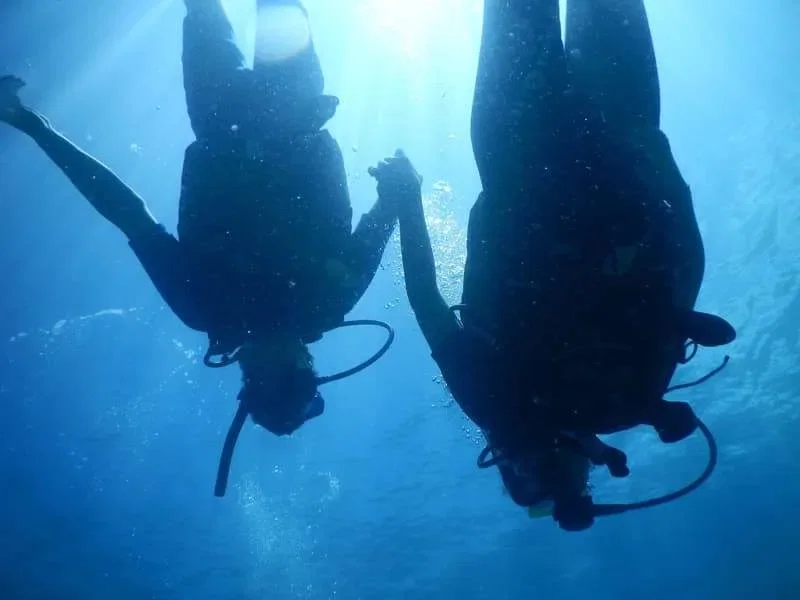
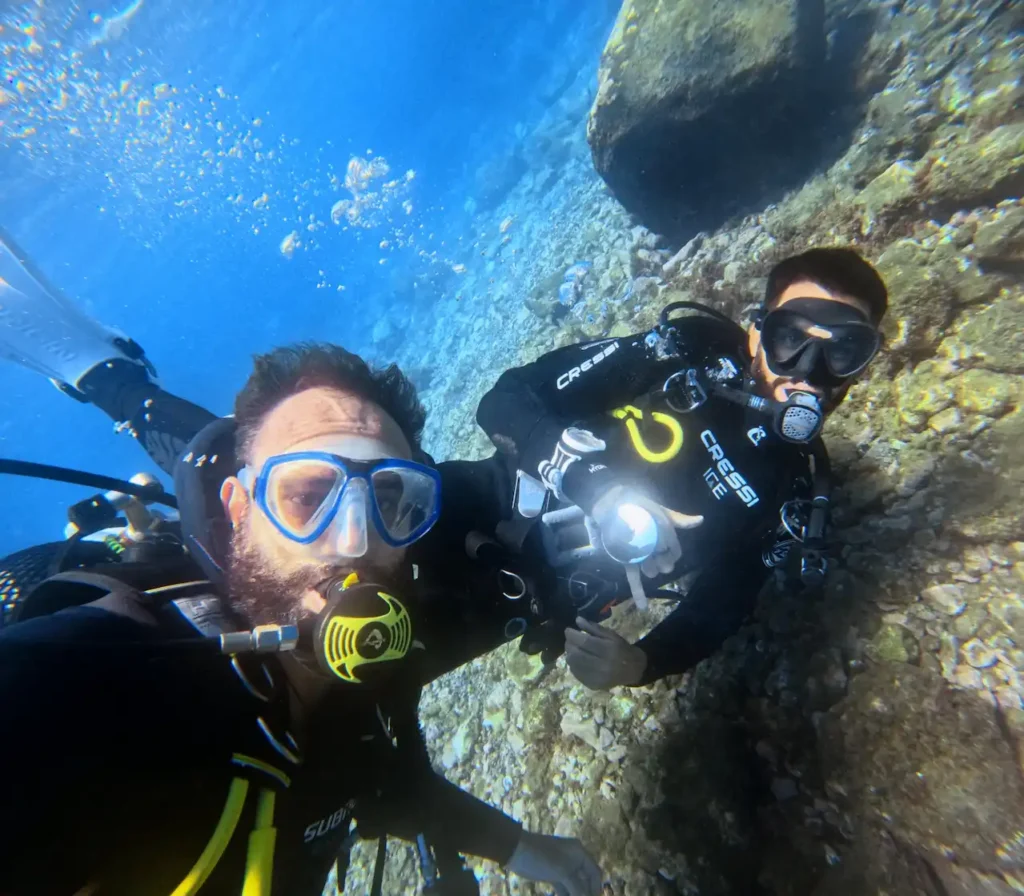
What to Do If You Start Feeling Scared Underwater ✅
If you start feeling overwhelmed during a dive, the most important thing is not to rush to the surface ❌. In scuba diving, ascents should be controlled and you should keep breathing normally. As pressure decreases during ascent, the air in the lungs expands, which is why it is essential to never hold your breath and always follow the instructor’s guidance. :contentReference[oaicite:1]{index=1}
During a beginner experience, you are accompanied by a professional. If something does not feel right, you do not have to solve it alone. You should signal, stop, breathe and let the instructor help you 🤿.
1. Stop and look at the instructor
If anxiety starts rising, the first step is to stop gently and make eye contact with the instructor 👀. Very often, simply looking at the person guiding you, receiving a calm signal and remembering that you can stop helps reduce the intensity of fear.
2. Breathe slowly and do not hold your breath
The regulator allows you to breathe underwater. If you feel nervous, focus on one simple idea: slow, continuous breathing without holding the air 🌬️. You do not need to breathe perfectly; you just need to avoid fast, chaotic breathing.
3. Use the “I am not OK” signal
Before entering the water, the local partner centre will explain the basic hand signals. If something feels wrong, use the signal. It is much better to say “I am not OK”, “I want to stop” or “let’s go shallower” than to push through out of embarrassment.
4. Go slightly shallower if needed
Sometimes fear appears because the descent is too fast or because you need a few extra seconds to adapt. In that case, the instructor can help you go slightly shallower, recover your calm and try again if it is appropriate.
5. Adapt or end the dive if you are not comfortable
A good beginner experience is not about forcing yourself. If the fear does not decrease, if you feel blocked or if you are not enjoying the activity, the right decision may be to stop, adapt the experience or end the dive ✅. In scuba diving, comfort and safety come before “finishing” the activity.
If your fear is connected to swimming ability or water confidence, you may also find our guide on whether you need to know how to swim for Discover Scuba Diving useful 🌊.
How to Prepare for a First Dive If You Are Nervous 💡
If you already know that you may feel nervous, preparation starts before you arrive at the dive centre. You do not need to hide it or pretend everything is fine. Actually, the clearer you are about your confidence level, the easier it is to adapt the experience.
- ✔ Say clearly that you are scared of scuba diving or may feel overwhelmed.
- ✔ Choose a beginner-friendly, calm and progressive experience.
- ✔ Avoid booking if that day you feel strong anxiety, extreme tiredness or emotional blockage.
- ✔ Ask whether the area is suitable for first-time divers and small groups.
- ✔ Do not compare yourself with friends, partners or family members.
- ✔ Do not force yourself to go deeper if your body is telling you to stop.
- ✔ Choose a dive centre that explains clearly, listens and does not rush you.
This is why, before booking, it is worth looking beyond the price. If you are comparing options, read our guide on how to choose a dive center in Tenerife, where we talk about safety, communication, group size, equipment and trust signals 🧭.
Is Discover Scuba Diving a Good Idea If I Am Afraid of Water? 🌊
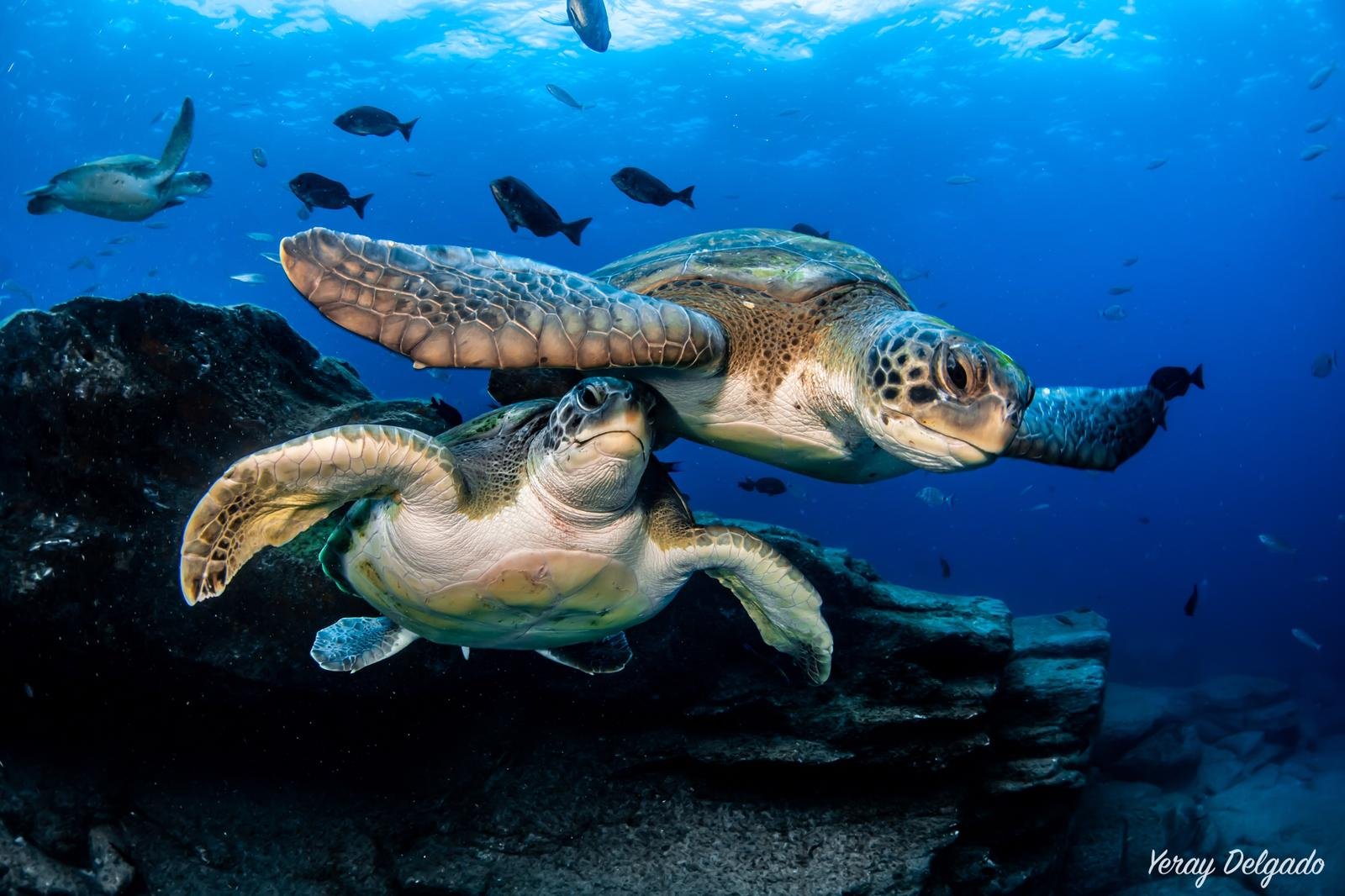
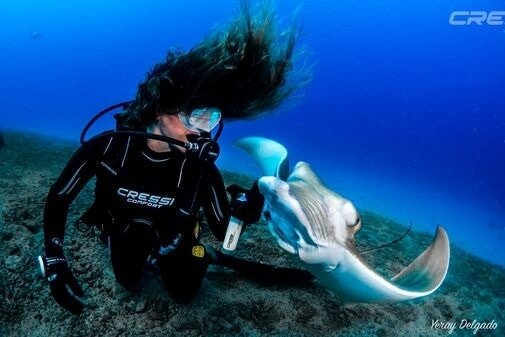
It depends on the type of fear. If you feel respect, normal nerves or curiosity before trying something new, a well-organized Discover Scuba Diving experience can be a beautiful way to build confidence 🐠. But if you have intense fear of water, panic when you cannot stand or anxiety that is hard to control, it may be better to start with something simpler first.
A first underwater experience should feel like an introduction, not an obligation. Nobody should force you to enter the water, go deeper or continue if you do not feel ready. The goal is to be able to say: “I tried it, I understood how it works and I felt supported”.
For many people, it helps to start in a calm area, with a clear briefing and a slow pace. If you are considering Tenerife, you can read our guide to Discover Scuba Diving in South Tenerife, where we explain how the experience usually works, what is included, approximate prices, areas and useful tips before booking 🤿.
FAQ: Fear and Panic Underwater ❓
Is it normal to be scared before Discover Scuba Diving?
Yes, it is very normal ✅. Many people feel nervous before their first dive. The important thing is to choose a progressive experience, communicate your doubts and not force yourself.
What should I do if I panic underwater?
The most important thing is not to rush to the surface. Look at the instructor, keep breathing continuously, use the signal that you are not OK and let the professional help you.
Can I stop a dive if I am not comfortable?
Yes. A scuba diving experience can be adapted or stopped if you are not comfortable. Safety and calm are more important than completing the dive.
Will the instructor stay with me all the time?
In a beginner experience, professional supervision is constant. The local partner centre will explain the equipment, hand signals and procedure before entering the water.
What if I have anxiety or panic attacks?
If you have intense anxiety, frequent panic attacks or medical concerns, the safest option is to speak with a healthcare professional first and explain it to the dive centre before booking.
Book Your First Dive With More Confidence 🐠
Feeling scared before scuba diving does not make you strange or incapable. It simply means you may need an experience that is calmer, clearly explained and adapted to your rhythm.
At Family Elite Divers, we help travellers find and book scuba diving experiences with certified local partner dive centres 🤝. We guide you towards an option that fits your level, destination, expectations and comfort in the water.
If you want to understand the process before deciding, you can read how Family Elite Divers works, where we explain the booking process, communication and experience organization.
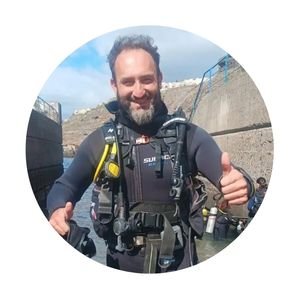
I’m Esteban, a diver and the person behind Family Elite Divers.
Tell me your skill level, your dates, and where you’d like to dive, and I’ll help you choose the experience that best suits you.
Do you have any questions before booking? Write to me, and I’ll give you personalized guidance.