Is Discover Scuba Diving Safe?
Key safety tips for your first scuba diving experience with more confidence.
Is Discover Scuba Diving Safe?
Key safety tips for your first scuba diving experience with more confidence.
Home » Is Discover Scuba Diving Safe? Beginner Guide
Is Discover Scuba Diving Safe? 🤿
If you are thinking about trying scuba diving for the first time, it is completely normal to ask: is Discover Scuba Diving safe? 🌊 In general, it can be a safe beginner experience when it is carried out by qualified professionals, in suitable conditions and with a clear briefing before entering the water.
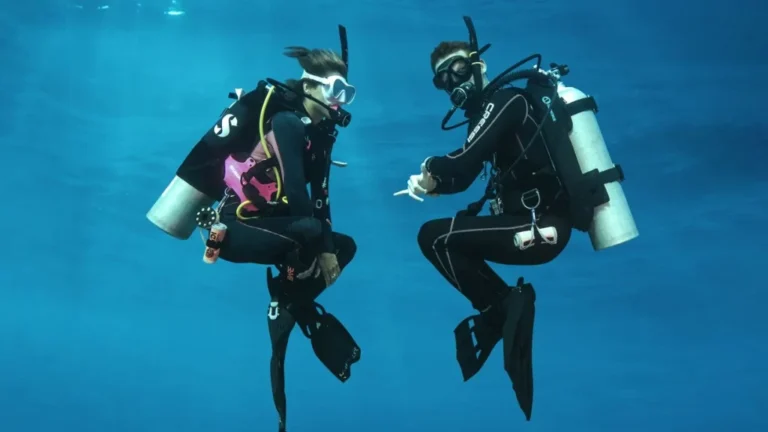
A Discover Scuba Diving experience is not an advanced dive and should never feel like something you are thrown into without preparation. It is an introductory scuba experience designed for people without certification, where basic rules are explained, the equipment is checked and you enter the water with constant professional supervision 🐠.
Safety does not depend only on the equipment. It also depends on factors such as sea conditions, depth, group rhythm, communication, the participant’s health and the experience of the local dive centre carrying out the activity. That is why a good first dive should feel progressive, calm and adapted to each person’s level.
In scuba diving, one of the basic safety rules is to breathe continuously and never hold your breath during ascent, because air expands as pressure decreases. This type of principle is explained before entering the water and is part of the basic safety instructions in introductory scuba experiences. ([en.wikipedia.org](https://en.wikipedia.org/wiki/Introductory_diving?utm_source=chatgpt.com))
At Family Elite Divers, we work as a booking and intermediary service, connecting travellers with certified local partner dive centres 🤝. The activity itself is carried out by the corresponding local partner centre, which evaluates the conditions of the day, the participant’s level and the safety of the experience.
If you are still comparing options, you can read our guide to what Discover Scuba Diving is, where we explain how it works, what is included and who it is designed for ✅.
Why Discover Scuba Diving Can Be a Good First Experience 🌊
A well-organized beginner dive is designed so that someone new to scuba can try the activity without committing to a full course on day one. The idea is to help you breathe underwater, get familiar with the equipment and discover the basic sensations with professional support.
A typical beginner experience usually includes several important steps:
- ✔ A clear briefing about equipment, breathing and basic hand signals.
- ✔ Equipment check before entering the water.
- ✔ Progressive entry, adapted to the area and sea conditions.
- ✔ Professional supervision throughout the activity.
- ✔ Controlled depth, suitable for beginners.
- ✔ Constant communication through simple hand signals.
- ✔ Possibility to stop if you do not feel comfortable.
The goal is not to go deep or prove anything. The goal is to enjoy a safe, calm and memorable first scuba diving experience 🐠. If you feel nervous, unsure or scared, it is always better to say it from the beginning so the local partner centre can adapt the pace.
You may also find our guide to what to expect on your first scuba dive in Tenerife useful, especially if you want to understand sensations, duration, breathing and professional support before booking.
What Risks Exist and How Are They Reduced? ✅
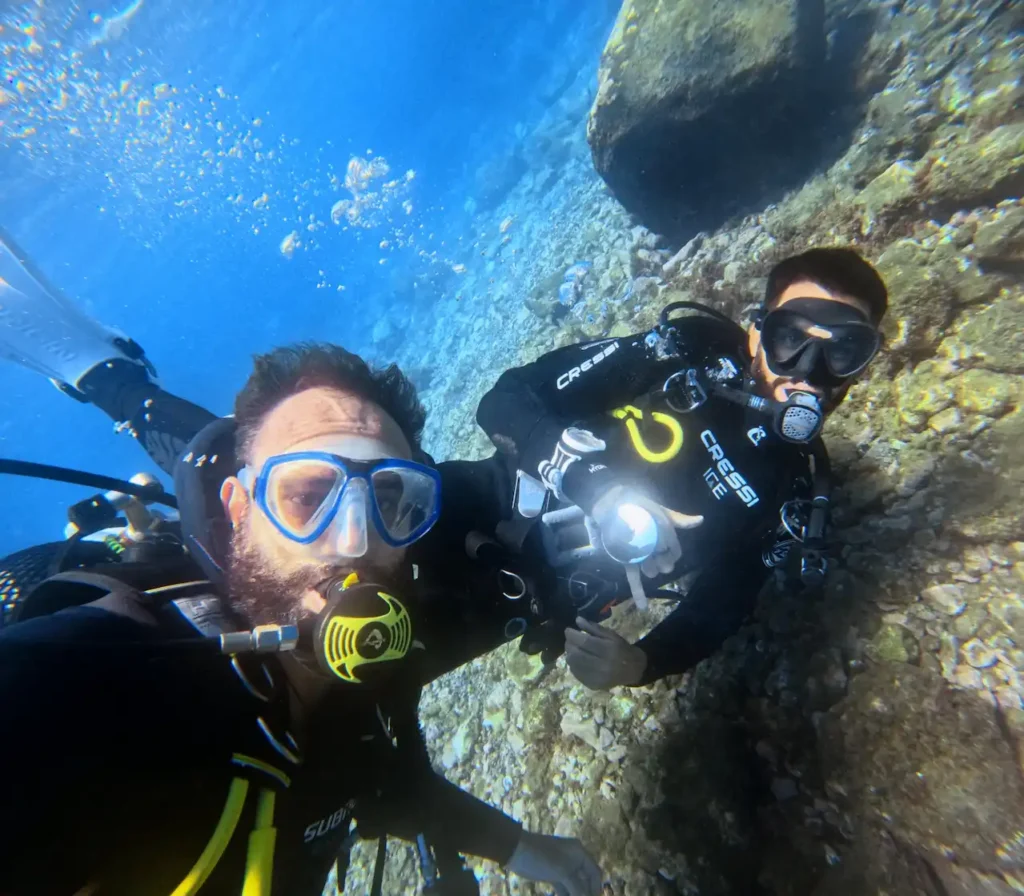
Like any activity in the ocean, scuba diving has risks. The important thing is to understand that in a beginner Discover Scuba Diving experience, those risks are reduced through planning, clear limits, qualified professionals, suitable equipment and good communication 🤿.
Some possible risks or discomforts can include:
- ✔ Feeling nervous or overwhelmed while breathing through the regulator.
- ✔ Ear pressure during descent.
- ✔ Water entering the mask.
- ✔ Tiredness if the person is tense and cannot relax.
- ✔ Fear when you cannot stand or when the environment feels unfamiliar.
- ✔ Changing sea conditions, such as swell or reduced visibility.
Most of these situations are managed with a good briefing and a progressive descent. For example, if you feel pressure in your ears, you should not keep descending by force. The correct approach is to signal, stop, go slightly shallower and try again gently 👂.
If this is one of your concerns, read our guide on how to equalize your ears when scuba diving, where we explain what to do if pressure appears during descent.
1. Depth should be suitable for beginners
A beginner scuba experience should not be treated like a deep dive. In introductory programs, depth is controlled and adapted to the program, environment and professional judgement. Introductory experiences such as Discover Scuba Diving are based on conservative limits and direct supervision, whether they take place in confined water or open water depending on the case. ([en.wikipedia.org](https://en.wikipedia.org/wiki/Introductory_diving?utm_source=chatgpt.com))
2. The pace should feel calm
Safety improves a lot when there is no rush. A beginner needs time to understand the equipment, practise breathing, get used to the mask and feel comfortable in the water 🌊.
3. The group should not move beyond your level
If it is your first time, you should not feel dragged by the rhythm of other people. A safe experience should respect your level, calmness, communication and ability to adapt.
4. You should be able to say “I am not comfortable”
An important part of safety is the ability to stop. If you feel overwhelmed, cannot equalize, feel unsafe or simply want to get out, you should be able to signal and receive help without feeling pressured ✅.
If you are worried about fear or anxiety, you can read our article on what to do if you feel scared or panic underwater, written for people who want to try scuba diving but need a calmer approach.
When Is It Better to Wait Before Trying Scuba Diving? ⚠️
Although Discover Scuba Diving can be safe for many people, there are situations where it is better to wait, ask for advice or avoid diving that day. Safety also means knowing when not to dive.
- ❌ If you have a strong cold, congestion or ear pain.
- ❌ If you have intense anxiety or panic that is difficult to control.
- ❌ If you cannot stay calm in the water.
- ❌ If you have important medical doubts and have not asked for advice.
- ❌ If you have consumed alcohol or do not feel well.
- ❌ If the local partner centre considers that sea conditions are not suitable.
It is also important to be honest about your level. If you are not a strong swimmer, that does not automatically mean you cannot try scuba diving, but you should mention it before booking. You can read our guide on whether you need to know how to swim for Discover Scuba Diving 🌊.
How to Choose a Safer Beginner Scuba Experience 💡
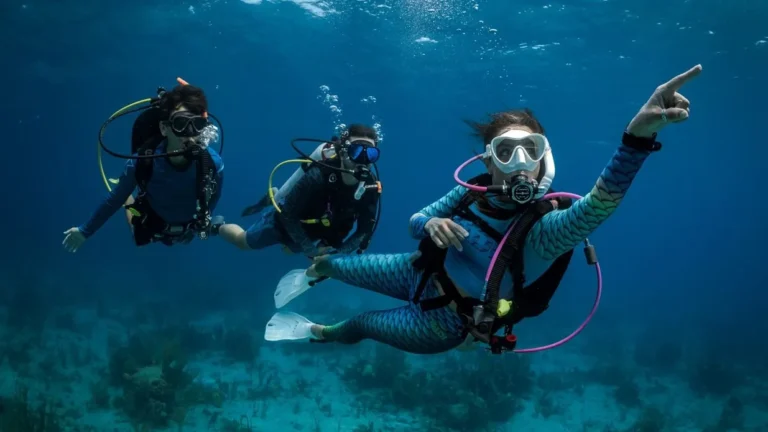
To make your first experience positive, do not look only at the price. A safe Discover Scuba Diving experience should give you confidence before you even book: clear information, easy communication, a proper briefing, suitable equipment and a pace adapted to beginners 🤿.
Before booking, pay attention to these points:
- ✔ The activity is carried out by a certified local partner dive centre.
- ✔ You understand what is included and approximately how long it takes.
- ✔ You can ask about depth, location, conditions and required level.
- ✔ There is a clear explanation of hand signals and breathing.
- ✔ The pace is suitable for real beginners.
- ✔ You do not feel pressured if you say you are nervous or unsure.
- ✔ The final decision considers the sea, your level and safety.
At this point, choosing the right operator matters. If you are comparing options, we recommend reading our guide on how to choose a dive center in Tenerife, where we explain safety, group size, communication, equipment and trust signals 🧭.
FAQ: Safety in Discover Scuba Diving ❓
Is Discover Scuba Diving dangerous?
Discover Scuba Diving should not be approached as a dangerous activity, but it is still an ocean activity using scuba equipment. That is why it should be done with qualified professionals, suitable conditions and constant supervision.
Can I stop if I feel overwhelmed?
Yes ✅. If you do not feel comfortable, you should signal it. A good beginner experience can be adapted, paused or ended if the person does not feel ready to continue.
What happens if water enters my mask?
It can happen and it does not mean there is a serious problem. The professional will explain what to do. The important thing is to stay calm, keep breathing and follow instructions.
Is it safe if I am not a strong swimmer?
It depends on your comfort in the water. You do not need to be an expert swimmer, but you should be able to stay calm, follow instructions and communicate.
Will the instructor stay with me the whole time?
In a beginner experience, professional supervision is constant. The local partner centre will explain the equipment, hand signals, breathing and procedure before entering the water.
Book Your First Experience With More Peace of Mind 🐠
Discover Scuba Diving can be a safe and very special first experience when it is organized properly. The key is to choose an option adapted to beginners, clearly explained and carried out by qualified local professionals.
At Family Elite Divers, we help travellers find and book experiences with certified local partner dive centres 🤝, so you can choose an activity that fits your level, destination, expectations and comfort in the water.
If you want to understand the process before deciding, you can read how Family Elite Divers works, where we explain the booking process, communication and experience organization.
I’m Esteban, a diver and the person behind Family Elite Divers.
Tell me your skill level, your dates, and where you’d like to dive, and I’ll help you choose the experience that best suits you.
Do you have any questions before booking? Write to me, and I’ll give you personalized guidance.