Volcanic Diving in the Canary Islands 🇮🇨
Explore lava reefs, volcanic caves, natural arches and unique underwater landscapes.
Volcanic Diving in the Canary Islands 🇮🇨
Explore lava reefs, volcanic caves, natural arches and unique underwater landscapes.
Home » Volcanic Diving in the Canary Islands | Unique Underwater Landscapes
🌋 Volcanic Diving in the Canary Islands: A Unique Underwater Landscape
Volcanic diving in the Canary Islands is one of the most distinctive underwater experiences you can find in Europe. Here, you are not only diving to see fish — you are exploring lava reefs, natural arches, volcanic caves, black rock formations and underwater landscapes shaped by ancient eruptions 🌊
Unlike tropical reef destinations, the Canary Islands have a very different underwater identity. The seabed is shaped by solidified lava, basalt rock, volcanic walls, sandy patches and dramatic drop-offs, creating dive sites that feel raw, powerful and visually unique.
This makes every dive a combination of geology, marine life and controlled adventure. Depending on the island and the dive site, volcanic diving can be suitable for beginners, certified divers or more experienced divers looking for deeper walls, caves or swim-throughs.
If you are still comparing islands before planning your trip, start with our complete Canary Islands diving guide, where we explain the main differences between the islands.
📌 Quick Summary: Volcanic Diving in the Canary Islands
- ✔ The main highlights are lava reefs, volcanic caves, tunnels, arches and underwater walls
- ✔ Some of the most interesting islands are Tenerife, El Hierro, La Palma and Lanzarote
- ✔ There are options for beginners, certified divers and advanced divers
- ✔ The experience combines underwater scenery, marine life and a sense of exploration
- ✔ Safety depends on choosing the right dive site, local operator, guide and sea conditions
🌊 What Is Volcanic Diving?
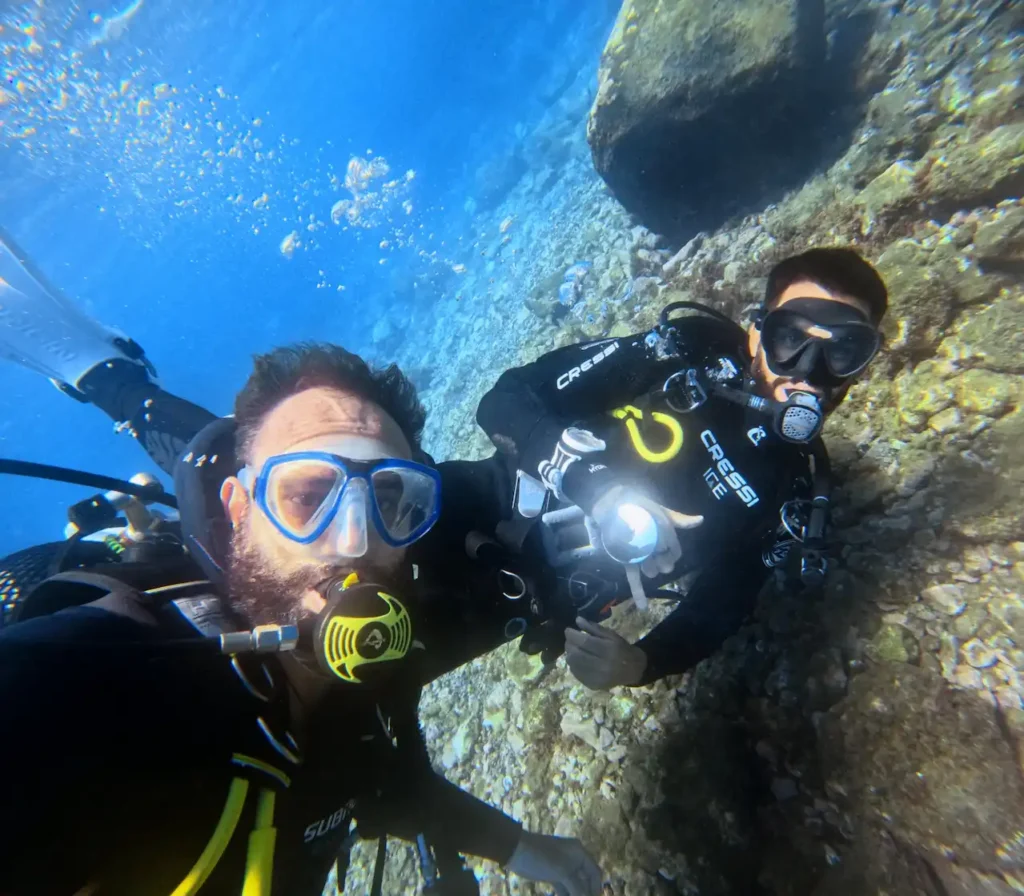
Volcanic diving means diving in underwater environments formed by volcanic activity. Instead of coral reefs, you usually find solidified lava, cracks, caves, lava tubes, natural arches, rocky platforms, walls and deep blue drop-offs.
In the Canary Islands, these formations appear in many different dive areas. Some are calm and accessible, while others require better buoyancy control, previous experience and a professional local guide.
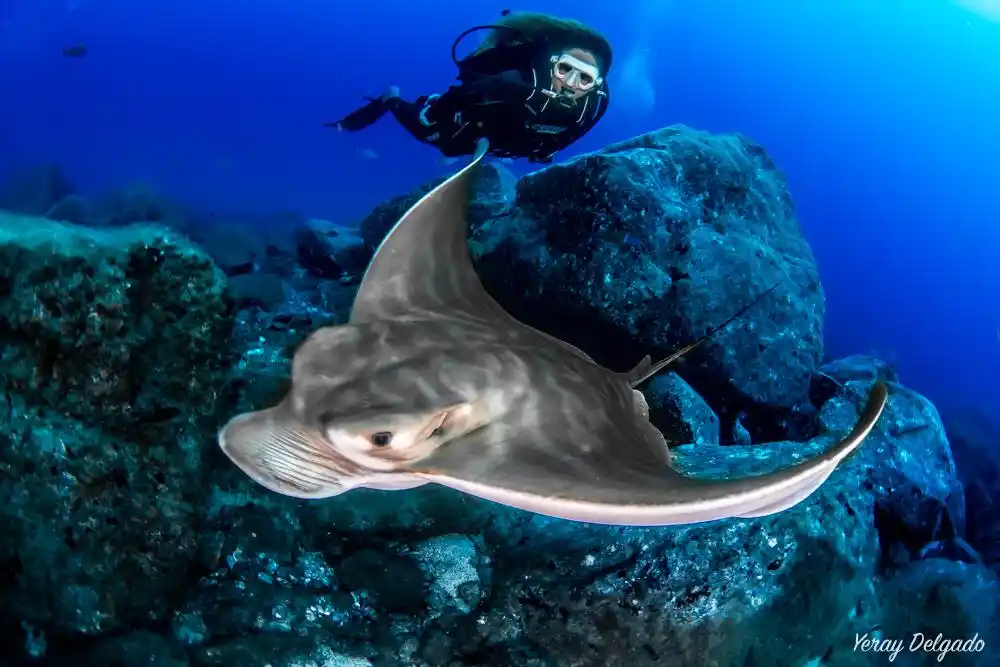
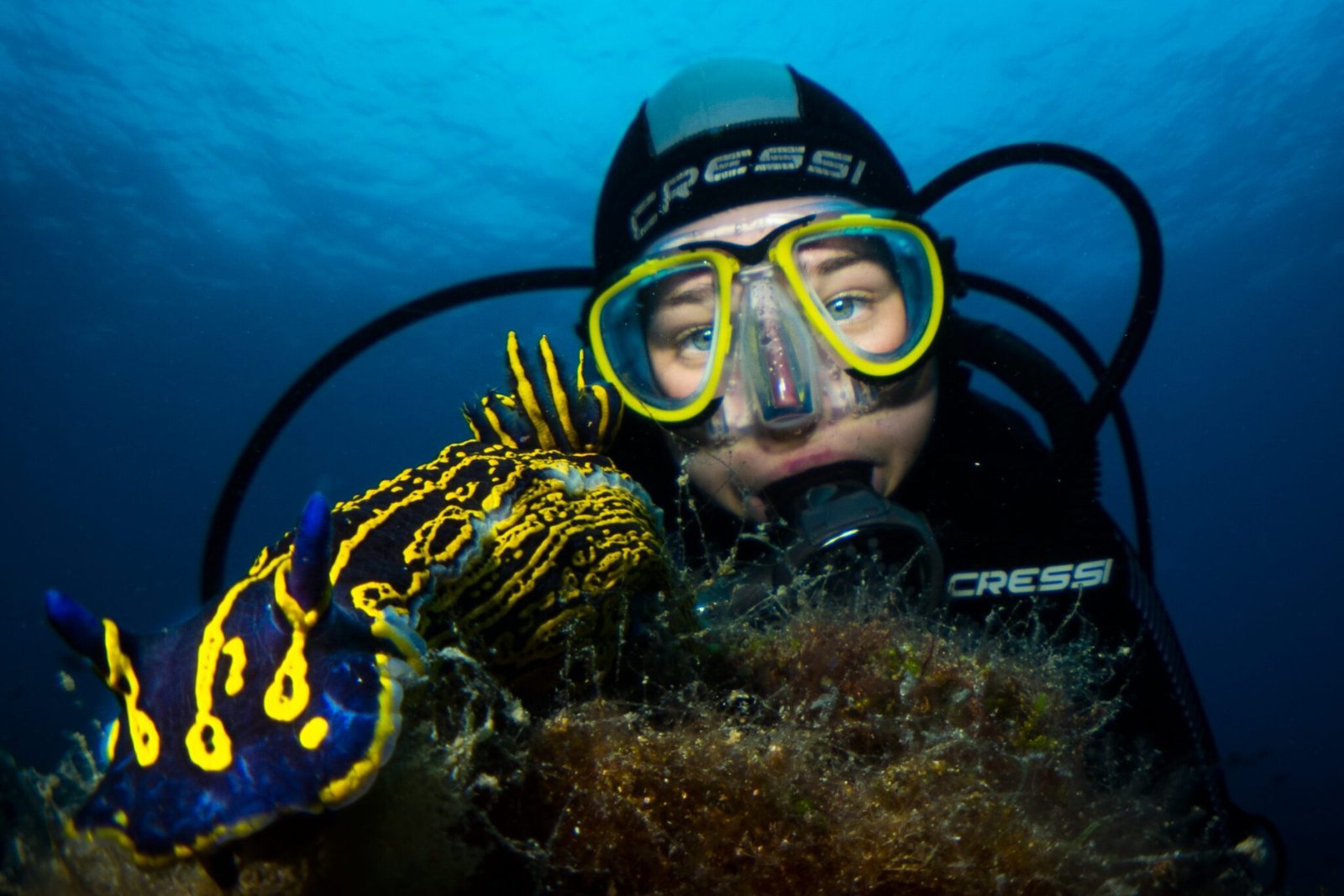
These formations are not just beautiful scenery. They also create shelter for marine life. Around volcanic rocks, divers may find octopus, moray eels, rays, angel sharks, schools of fish, crustaceans and many Atlantic species 🐠
If marine life is one of your main interests, you can continue with our guide to marine life in the Canary Islands.
🏝️ Best Islands for Volcanic Diving in the Canary Islands
All the Canary Islands have volcanic origins, but the underwater experience is not the same everywhere. Some islands are easier for beginners, others feel wilder, and some offer a stronger mix of volcanic scenery, visibility, marine life and logistics.
🌋 Tenerife: Variety and Easy Logistics
Tenerife is one of the most complete islands for volcanic diving. It offers year-round dive centers, good travel logistics and a wide variety of areas along the south, east and north coasts.
Depending on the location, you can find lava reefs, rocky formations, small caves, arches, volcanic sand patches and plenty of marine life. This makes Tenerife a strong option for both first-time divers and certified divers.
For a general overview, read our scuba diving in Tenerife guide. If you want to compare specific areas, you can also explore diving in Radazul, diving in Garachico or diving in Los Cristianos.
💎 El Hierro: Wild Volcanic Diving
El Hierro is one of the strongest references for volcanic diving in the Canary Islands. Around La Restinga, divers can find dramatic underwater landscapes, protected areas, strong visibility and a more natural, less crowded diving atmosphere.
This island is especially attractive for certified divers looking for wilder dive sites, volcanic walls, marine reserves and a stronger feeling of adventure. It may require more planning than Tenerife, but it can be one of the most memorable diving experiences in the archipelago.
You can read more in our full guide to diving in El Hierro.
🌴 La Palma: Lava, Dark Seabeds and Quiet Dive Sites
La Palma offers a very volcanic underwater identity. Its dark seabeds, lava formations and quieter atmosphere make it interesting for divers who want something different from the busiest diving areas.
It can be a good choice for travellers looking for nature, volcanic scenery and a more relaxed diving environment. For more details, read our guide to scuba diving in La Palma.
🌊 Lanzarote: Contrast, Lava and Underwater Landscapes
Lanzarote also stands out for its volcanic character, dark seabeds and high-contrast underwater scenery. Depending on the area, it can offer very visual dives, especially for certified divers.
For travellers comparing islands, Lanzarote can be a strong option if you want diving, volcanic landscapes and an island with a very marked geological identity.
📍 Volcanic Landscapes You Can See While Diving
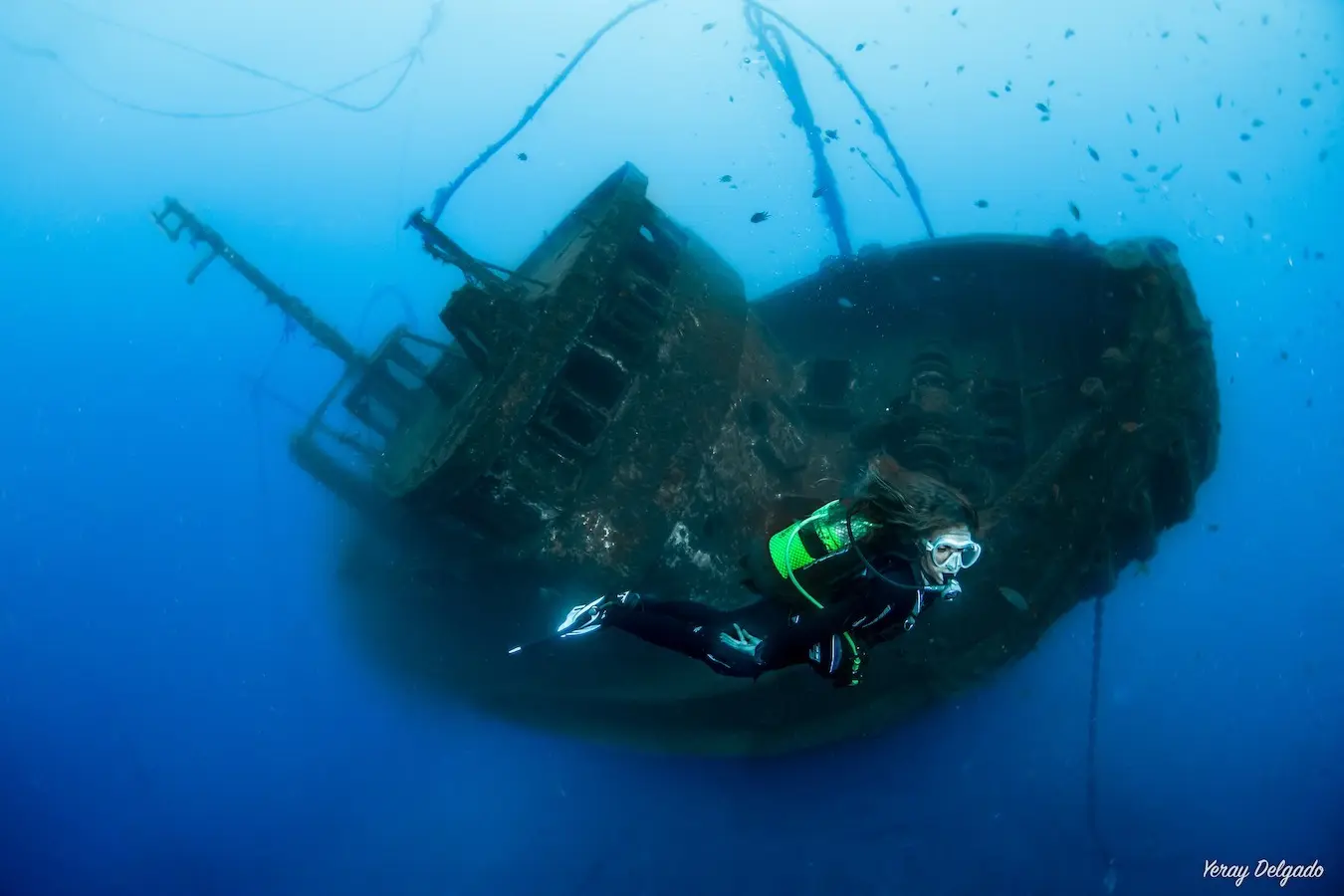
One of the biggest attractions of volcanic diving in the Canary Islands is the variety of underwater formations. Not every dive site has all of them, but together they explain why the archipelago feels so different below the surface.
🌋 Lava Tubes
Lava tubes are formations created by ancient lava flows. In some places, they create tunnels or underwater passages that give divers a strong sense of exploration.
Not all lava tubes are suitable for all levels. Some require good buoyancy control, previous experience and professional guidance.
🪨 Natural Arches and Swim-Throughs
Volcanic arches and swim-throughs are some of the most visual formations you can encounter underwater. They allow divers to move between rock structures and create a very different feeling from a simple flat-bottom dive.
They are especially attractive for underwater photography, as long as divers maintain good buoyancy and avoid touching the seabed or the walls.
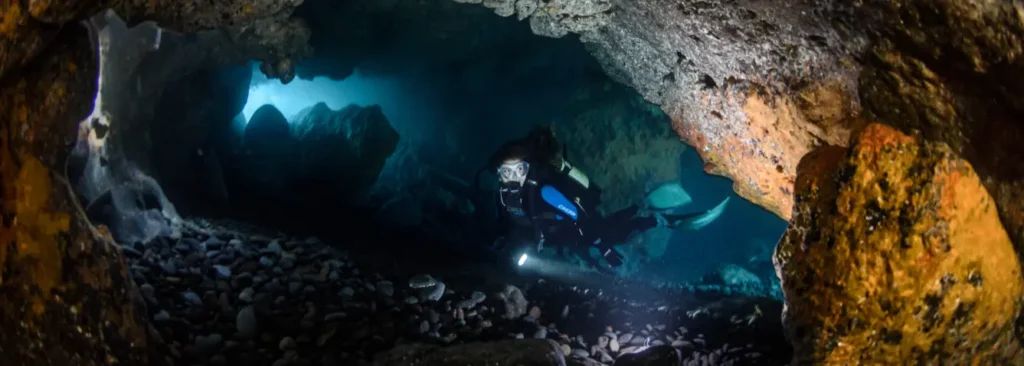
🌊 Volcanic Caves and Cracks
Caves, cracks and darker volcanic areas often provide shelter for moray eels, octopus, crustaceans and other species that prefer protected spaces.
Entering caves is not always recommended for every diver. It is important to understand the difference between observing a cavity from outside, passing through a simple swim-through and doing real cave diving, which requires specific training.
🧱 Volcanic Walls and Drop-Offs
Volcanic walls can be among the most spectacular landscapes for experienced divers. They may combine depth, schools of fish, visibility and the feeling of looking into the blue.
These dives are usually better suited to certified divers with solid buoyancy control and comfort at depth.
🐠 Marine Life Around Volcanic Dive Sites
Although the landscape is the main attraction, marine life plays an important role. Volcanic formations create shelter, feeding areas and structures where life concentrates.
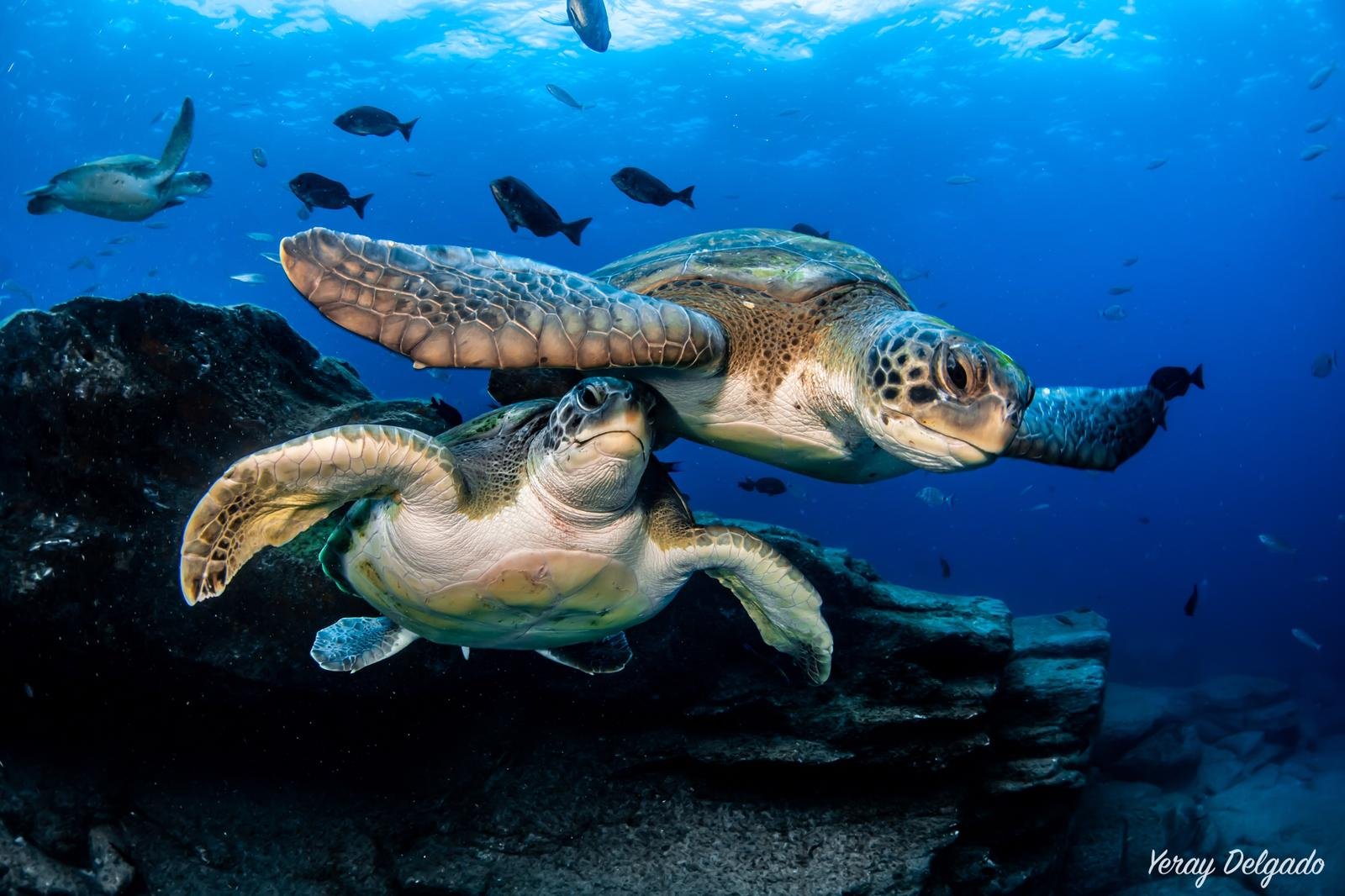
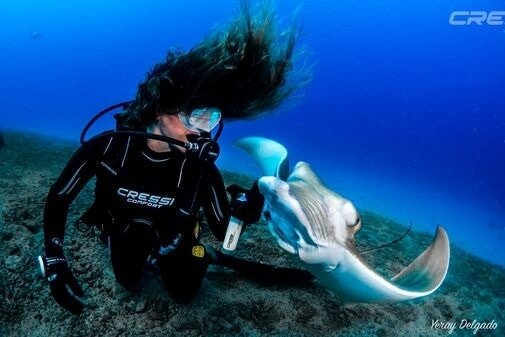
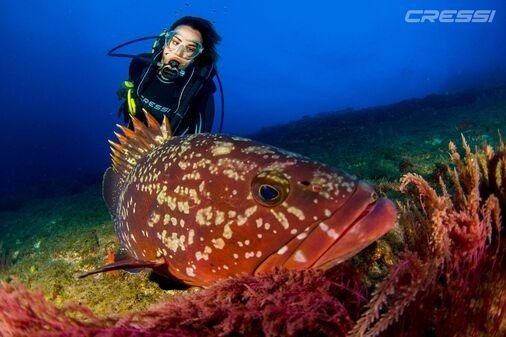
Around these dive sites, you may see octopus, moray eels, rays, angel sharks, schools of fish, barracudas, groupers, trumpetfish and turtles, depending on the island, season and specific location.
You can learn more about these species in our guide to marine life in the Canary Islands or our article about sharks and angel sharks in the Canary Islands.
📅 Best Time for Volcanic Diving in the Canary Islands
One of the great advantages of the Canary Islands is that diving is possible during most of the year 🌞. However, conditions are not identical across every island or dive area.
Summer and early autumn often bring calmer seas, comfortable temperatures and very good visibility. Winter can be interesting for some marine life encounters, but it may also bring more variation in swell, wind or surface conditions depending on the area.
For volcanic diving, local conditions matter a lot. Some caves, walls or swim-throughs may become more demanding if there is current, reduced visibility or surge.
If you are planning a trip to Tenerife, this guide about the best time to dive in Tenerife can help you understand the seasons better.
🎒 Safety Tips for Volcanic Diving
Volcanic diving can be spectacular, but it requires attention and respect for the environment. The key is to choose a dive adapted to your real level and follow your guide’s instructions.
- ✔ Maintain good buoyancy control near rocks, walls and sandy areas
- ✔ Do not touch volcanic formations or marine life
- ✔ Follow the local guide and respect the dive plan
- ✔ Do not enter caves, tunnels or closed passages without proper experience
- ✔ Use a torch only when the dive center recommends it
- ✔ Choose dive sites according to your certification, comfort and conditions
❓ FAQ — Volcanic Diving in the Canary Islands
Is volcanic diving suitable for beginners?
Yes, some volcanic dive sites are suitable for beginners, especially in Tenerife. However, not all caves, walls or swim-throughs are appropriate for every level.
Do I need a certification?
It depends on the dive. Some volcanic environments can be experienced during a beginner activity, while others require Open Water, Advanced or previous experience.
Is volcanic diving dangerous?
Not when done with a professional dive center, a local guide and suitable conditions. Risk increases when divers enter closed spaces or ignore sea conditions.
Which island is best for volcanic diving?
It depends on your level and goals. Tenerife offers variety and easy logistics, El Hierro feels wilder, La Palma has quiet volcanic landscapes and Lanzarote offers strong geological contrast.
🏆 Experience Volcanic Diving Safely
To enjoy volcanic diving in the Canary Islands, it is important to choose professional local operators, experienced guides and dive sites adapted to your level.
At Family Elite Divers, we help travellers compare destinations and reserve diving experiences with selected local centers where available, always prioritising safety, small groups and professional standards.
If you want to experience a different kind of dive, start by comparing our diving destinations or reviewing the best places to dive in the Canary Islands.
I’m Esteban, a diver and the person behind Family Elite Divers.
Tell me your skill level, your dates, and where you’d like to dive, and I’ll help you choose the experience that best suits you.
Do you have any questions before booking? Write to me, and I’ll give you personalized guidance.
🔗 Related Articles
If you are interested in volcanic diving, these guides can help you compare islands, dive areas and underwater experiences in the Canary Islands: