Can you scuba dive with a cold or should you cancel your dive
Congestion can make equalisation difficult and turn a simple dive into an avoidable risk.
Can you scuba dive with a cold or should you cancel your dive
Congestion can make equalisation difficult and turn a simple dive into an avoidable risk.
Home » Can You Scuba Dive with a Cold?
If you have a dive booked and wake up with a blocked nose, cough or cold symptoms, it is completely normal to ask can you scuba dive with a cold? 🤿 The cautious answer is: if your cold affects your breathing, ears, sinuses, energy or ability to equalise, it is safer to cancel or postpone the dive.
Quick answer: you should not scuba dive with a cold if you have nasal congestion, sinus pressure, ear pain, coughing, chest congestion, fever, general weakness or trouble equalising. For Discover Scuba Diving, courses or guided dives, safety comes before the booking. If you are unsure, speak with the dive centre before going and seek medical advice when symptoms are more than mild.
The issue is not only feeling uncomfortable. 🫧 When you dive, pressure changes affect your ears and sinuses. If you are congested, it may be harder to equalise and you could increase the risk of pain or barotrauma. DAN Europe explains that middle-ear barotrauma can be linked to poor equalisation and diving with a cold in its guide to ears and diving.
🤧 Why diving with a cold can be risky
When you have a cold, the tissues in your nose, throat and sinuses can become inflamed. 👃 You may also have mucus, blocked passages or pressure in your face. That matters because your Eustachian tubes and sinuses need to equalise smoothly when you descend and ascend.
- You may struggle to equalise your ears during descent.
- You may feel pain or pressure in your ears, forehead, cheeks or upper teeth.
- Congestion can change underwater and may become harder to manage.
- Coughing or chest tightness can make breathing through a regulator stressful.
- Taking decongestants to force the dive is not a reliable safety plan.
- Cancelling early is usually better than aborting the dive in pain.
For a first experience such as Discover Scuba Diving, this matters even more. 🐠 If you are already nervous about breathing underwater, adding blocked ears, sinus pressure or coughing can make the experience much less enjoyable and harder to manage.
🩺 When should you cancel or postpone the dive?
Not every cold is the same, but some warning signs are clear. ✅ If your symptoms affect breathing, attention, energy or equalisation, the safe decision is not to dive. A useful practical rule is simple: if you cannot breathe comfortably, think clearly and equalise gently, do not enter the water.
| Symptom | Possible diving issue | Cautious decision |
|---|---|---|
| Strong nasal congestion | Difficulty equalising ears and sinuses. | Postpone. |
| Ear pain or facial pressure | Possible barotrauma or strong discomfort. | Do not dive and seek advice. |
| Cough or chest congestion | Uncomfortable breathing and stress underwater. | Cancel. |
| Fever or general weakness | Reduced physical ability and attention. | Cancel. |
| Mild runny nose only | Depends on comfort and equalisation. | Ask the centre and be conservative. |
What about taking a decongestant?
This is where you need to be careful. 💊 Medication can create a false sense of security. Its effect may vary, wear off or not work as expected during the dive. DAN World also recommends speaking with a doctor if you feel you need medication in order to dive, in its resource on sinus barotrauma.
In practice, if you need medication just to equalise or breathe comfortably, that is already a warning sign. 🧭 At Family Elite Divers, we prefer a simple rule: do not force a dive just because you do not want to lose the booking. Your health and safety are worth more than one day underwater.
FED tip: if you have a cold, contact the dive centre as early as possible and explain your symptoms honestly. A serious centre will help you assess the situation and will not pressure you to dive if there is a risk of poor equalisation, coughing, fever or pain.
If your main concern is your ears, read our guide on how to equalise your ears while scuba diving. 👂 If you have recurring sinus issues, respiratory problems or medical history that may affect diving, check our guide to the medical certificate for diving in Spain.
✅ What to do if you get a cold before a dive
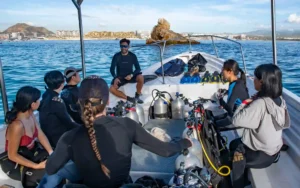
If you catch a cold before Discover Scuba Diving, an Open Water course or a guided dive, act early. 📅 Do not wait until you are on the boat, wearing the wetsuit and wondering whether to jump in. The earlier you tell the centre, the easier it is to adjust the plan.
Checklist before deciding
- You can breathe through your nose normally without feeling blocked.
- You have no ear pain, facial pressure or active sinus infection.
- You have no persistent cough or chest congestion.
- You have no fever or feeling of being unwell.
- You can equalise gently without forcing it.
- You have told the instructor or dive centre before the activity.
If you cannot tick those boxes, postponing is usually the smarter option. 🫧 Whether you are planning Discover Scuba Diving in South Tenerife or another beginner dive, the experience should happen when you can breathe, equalise and enjoy it calmly.
Common mistakes
- Hiding that you have a cold: the instructor needs to know for safety. 🤿
- Forcing equalisation: if it hurts, do not keep descending. 👂
- Thinking it is just a cold: pressure changes make the situation different underwater. 🌊
- Taking medication without medical guidance: it may not make the dive safe. 💊
- Diving only to avoid losing money: a bad dive can cost more than postponing. ✅
If you are worried about cancelling, contact us first. 📩 You can speak with Family Elite Divers and we will help you review your options with selected local partner centres. You can also read whether Discover Scuba Diving is safe to understand how beginner experiences should be managed.
❓ FAQ about scuba diving with a cold
Can I dive with a runny nose but no fever?
It depends on whether you are congested and whether you can equalise. If your nose is blocked, your sinuses feel pressured or your ears do not equalise easily, do not dive. 🤧
What happens if I cannot equalise underwater?
You should signal your instructor, stop descending and go slightly shallower. If it does not resolve gently, the dive should be changed or cancelled. 👂
Is it dangerous to dive with sinus congestion?
It can be. Sinus congestion can make pressure equalisation difficult and may increase the risk of pain or barotrauma. Seek medical advice before diving. 🩺
Can I snorkel if I have a cold?
Snorkelling does not involve the same pressure changes as scuba diving, but if you have fever, weakness, coughing or breathing difficulty, it is still better to avoid it. 🌊
How long should I wait to dive after a cold?
There is no universal number of days. What matters is that you feel recovered, breathe comfortably, have no congestion and can equalise without discomfort. ✅
Is Discover Scuba Diving safer because it is shallow?
Not necessarily. Even shallow dives involve pressure changes, especially in the first few metres. If you are congested, problems can happen early in the dive. 🤿
In short: if you have a cold with congestion, ear pain, coughing, fever or trouble equalising, do not dive. Postponing is not failure; it is a responsible decision. When you are well again, you will enjoy the dive much more.
I’m Esteban, a diver and the person behind Family Elite Divers.
Tell me your skill level, your dates, and where you’d like to dive, and I’ll help you choose the experience that best suits you.
Do you have any questions before booking? Write to me, and I’ll give you personalized guidance.