The Importance of a Good Dive Briefing: Safer, Calmer and Better-Organised Diving
What a clear pre-dive briefing should include before entering the water
The Importance of a Good Dive Briefing: Safer, Calmer and Better-Organised Diving
What a clear pre-dive briefing should include before entering the water
Home » The Importance of a Good Dive Briefing: Safer, Calmer and Better-Organised Diving
🤿 Why a good dive briefing matters
A dive briefing is the explanation given before entering the water. It may look like a short talk, but it can make a huge difference to the dive because it explains the plan, the route, the signals, the group, the conditions, the equipment, the limits and what to do if something does not feel right. 🤿
A good briefing is not only for beginners. It matters for certified divers, Discover Scuba participants, Open Water students and travellers diving in a new area. Every dive site has its own entry point, exit, depth, visibility, current, navigation references and local details. 🌊
Quick answer: a good dive briefing should clearly explain where you enter and exit, maximum depth, route, hand signals, buddy or group system, air checks, safety limits, points of interest, sea conditions and emergency procedures. If you do not understand the plan before getting in the water, you should ask. ✅
At Family Elite Divers, we help travellers find and book scuba experiences with selected local dive centers and authorised partner centers. For us, a clear briefing is a trust signal: it shows that the centre cares about organisation, safety, communication and the diver’s comfort, not just getting people into the water quickly. You can see the process on How Family Elite Divers works. 🧭
A briefing reduces uncertainty before the dive
Many uncomfortable moments underwater start with a question that was never answered on the surface. If you do not know where the group is going, what signal to use, when to return, how to communicate or what to do if you get separated, you are more likely to feel tense. A clear briefing helps you dive with more confidence, less stress and better awareness. 📋
If you are still comparing where to dive, start with our scuba diving destinations. For a wider island-level overview, you can also read diving in the Canary Islands. 🌍
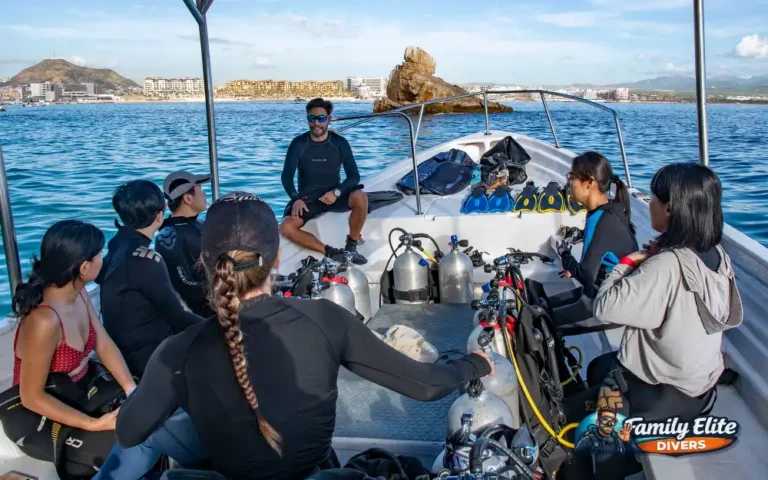
📋 What should a good pre-dive briefing include?
A useful briefing should be clear, structured and adapted to the group. It does not need to be long, but it should cover the points that affect safety, communication, orientation, comfort and enjoyment during the dive. 🔎
Dive plan
Route, maximum depth, expected time, entry, exit and turnaround point should be clear before anyone enters the water. 🧭
Why it matters: it avoids confusion, rushed decisions and poor orientation underwater. ✅
Signals and communication
OK, up, down, problem, air, cold, ear, stop, return and end of dive should be reviewed, even if they seem basic. 👌
Why it matters: underwater communication depends on signals, so the group needs one shared language. 📋
Safety procedures
Buddy separation, low air, ear discomfort, mask issues, ascent and surface procedures should be explained simply. ⚠️
Why it matters: knowing what to do reduces panic and helps the whole group respond better. ✅
Conditions and environment
Current, swell, visibility, temperature, marine life, bottom type and sensitive areas help divers understand the real dive. 🌊
Why it matters: a calm-water dive is not managed the same way as a dive with current, swell or low visibility. 🧭
A briefing should also set expectations
For a Discover Scuba Dive, the briefing should explain how to breathe, how to equalise, how to move, which signs to use and what to do if something feels uncomfortable. For a guided dive, it should include the route, maximum depth, air management, turnaround point and local conditions. For a course, it should also connect clearly with the skills that will be practised. 🤿
As a general standard, dive briefings are used to explain the dive plan, contingency plan and emergency plan, with the level of detail adapted to the dive and the group. Standard briefing topics often include site description, entry and exit, procedures, emergencies, hand signals, environmental orientation and a pre-dive safety check. ⚓
A weak briefing is a warning sign
If nobody explains the plan, questions feel unwelcome, signals are not reviewed or the group enters the water without a clear safety check, that is not a good sign. It does not mean something will go wrong, but it does suggest weak organisation. In scuba diving, clarity before entering the water is part of safety. ⚠️
FED tip: before booking, pay attention to how the centre answers your questions. A centre that communicates clearly by message or email is more likely to care about the briefing too. If you are a beginner, prioritise patient instructors, small groups, clear instructions and time to ask questions. ✅

🧭 How to get the most from a dive briefing
A briefing is not something you should passively ignore while waiting to jump in. As a diver, your job is to listen, ask and speak up if something is unclear. This matters even more if it is your first dive or your first time in that area. 📋
Ask before entering the water
If you do not understand a signal, are unsure about the entry or feel worried about equalising your ears, ask on the surface. It is much easier to solve a question on the boat, shore or platform than to improvise underwater. If this is a concern, read how to equalise your ears when scuba diving. 👂
Do not switch off just because you are certified
A common mistake among certified divers is thinking they already know everything. But every dive changes: depth, route, current, visibility, entry, exit, navigation, marine life, buddy team and conditions. Listening to the briefing is not a beginner habit; it is part of diving well. 🌊
For Discover Scuba Diving, the briefing is part of the experience
For beginners, a good explanation can change the whole dive. When the instructor takes time to explain breathing, hand signals, ear equalisation, basic buoyancy and pace, the first-time diver usually enters the water much calmer. You can read more in what Discover Scuba Diving is. 🤿
Quick summary
- The briefing explains the plan: route, depth, entry, exit and expected dive time. 🧭
- It reduces risk: signals, emergencies, air, group position and conditions are clarified. ✅
- It improves the dive: fewer doubts, less stress and better awareness underwater. 🤿
- It matters for everyone: beginners, certified divers, students and experienced divers. 📋
- It is the time to ask: ears, mask, buoyancy, fear, current or water entry. 👂
- It is a trust signal: good organisation usually starts before entering the sea. 🌊
Briefing, booking and trust
A good briefing actually starts before you arrive at the dive centre. If the booking process already explains what is included, what to bring, what level you need, how the activity works and what happens if conditions change, you will arrive with fewer doubts. You may also find this guide useful: mistakes when booking diving in the Canary Islands. 📌
❓ FAQs about dive briefings
What is a dive briefing?
It is the pre-dive explanation where the plan, signals, safety, conditions, route and questions are reviewed. 🤿
Do experienced divers still need to listen to the briefing?
Yes. Even experienced divers need to know the specific site, route, depth, hazards, signals and plan for that dive. 📋
What hand signals are usually reviewed?
Common signals include OK, up, down, problem, low air, stop, return, ear problem and end of dive. 👌
What if I do not understand something in the briefing?
Ask before entering the water. A good instructor or guide will prefer answering on the surface rather than dealing with confusion underwater. ✅
Is a Discover Scuba briefing different?
Yes. For beginners, the briefing focuses more on breathing, basic signals, ear equalisation, calm movement, equipment and comfort. 🤿
Does Family Elite Divers consider briefing quality?
Yes. Family Elite Divers is a booking support service, and we prioritise authorised partner centres that care about safety, communication and organisation. 🧭
If you are thinking about booking a scuba experience and want to feel confident before entering the water, tell us your level, island, dates, whether it is your first time and what worries you most. We can help you choose an option with clear organisation and a proper briefing. 📩
I’m Esteban, a diver and the person behind Family Elite Divers.
Tell me your skill level, your dates, and where you’d like to dive, and I’ll help you choose the experience that best suits you.
Do you have any questions before booking? Write to me, and I’ll give you personalized guidance.
🔗 Related articles to dive with more confidence
If you want to prepare better before a dive, these guides will help you understand safety, booking and beginner experiences. 🤿
- Is Discover Scuba Diving safe? — risks, supervision and beginner safety explained. ✅
- Discover Scuba Diving: what it is, price and best places — full beginner guide to your first dive. 🤿
- Mistakes when booking diving in the Canary Islands — what to check before paying. 📋
- How to equalise your ears when scuba diving — tips to avoid discomfort during descent. 👂
- Fear of scuba diving or panic underwater — how to prepare if the sea makes you nervous. 🌊